
Driveways, parking aprons, paths, yards and small car parks
Sealing and Recolouring Tarmac Driveways in County Down
This is one of the few jobs we will refuse on the morning we are due to start, and the reason is never the work. It is the conditions. The tarmac has to be dry the whole way through, warm enough for the emulsion to break properly, and followed by enough dry hours to harden. Get any of those wrong and the best product on the market still fails.
What is actually being applied
A Bitumen Seal Is Not a Coat of Paint
Tarmac is stone held together by bitumen. What fades is not the stone. It is the bitumen at the surface, broken down by years of ultraviolet light until the drive turns from black to a chalky grey and loose chippings start lifting under a tyre. A restoration seal puts binder back into that top layer. It wets in, it re blackens, and it locks the loose fines down again. That is a different job to painting a wall and it follows different rules.
It is worth being clear about what you are buying. A seal restores the colour, holds a tired surface together, and slows the next few years of ultraviolet, standing water and fuel damage. It adds no structural strength at all. A drive that is sound but weathered is genuinely transformed by it. A drive that is breaking up from underneath is not, and no product on any shelf changes that.
We work out of the Killough Road in Downpatrick and take driveway work across County Down along with Belfast, Lisburn and Newry. If your property sits on an open, exposed site or within sight of the Irish Sea or Strangford Lough, be realistic about how often this comes round. Wind driven rain, salt and unbroken sun on a drive with nothing sheltering it all work the surface harder than a drive in a town street, and a coastal one will be ready for its next treatment sooner.
What We Seal and Recolour
- Domestic driveways, including the turning area and the apron in front of a garage, which is where wear always shows first
- Parking bays and hardstanding at the side or the rear of a property
- Shared and communal drives in a terrace or a small development, where one owner sealing on their own rarely reads well
- Tarmac paths and access routes around a house or a business premises
- Small car parks and yards, priced on measured area and condition rather than by the hour
What This Will Not Fix
If the surface rocks underfoot, if water sits in a hollow long after the rain has stopped, or if the cracking has spread into a pattern of interlocking plates rather than single lines, then the base under the tarmac has failed. That is an excavation and relaying job for a groundworks contractor. Sealing over it buys a good looking drive for one season and hides the fault while it gets worse underneath. The same goes for a drive that was laid too thin to begin with. We will tell you at the survey and we will not take the work.
The order of work
Two Waits Do More Work Than Any Machine
Most domestic drives are a two visit job rather than a two day job, because the gap in the middle is not something anyone can hurry. Treating, washing and repairing happen on the first visit. Sealing happens once the surface has genuinely dried out, which is a judgement made on the day rather than a date pencilled in a fortnight earlier.
- Step 1
Survey and a straight answer
We walk the drive looking for base failure, standing water, oil, broken edges and the fall towards the road or a gully. If the honest verdict is groundworks rather than coating, you get that verdict before you get a price.
- Step 2
Treat the growth before touching it
Moss, algae and lichen are killed with a biocide and left to do their work. Blasting living growth off first only spreads spores into every joint, and it comes back up through your new finish inside a season.
- Step 3
Wash back to sound tarmac
The surface is washed to take off dead growth, silt and loose fines. Pressure is controlled deliberately, because too much lance on aged tarmac tears chippings out and leaves a scoured patch that shows through anything laid over it.
- Step 4
The drying wait
Washing puts a lot of water into an open surface. Tarmac looks dry long before it is dry, so we wait on the body of it rather than the top of it. After heavy rain or a wash, that means days rather than hours.
- Step 5
Repairs, weeds and contamination
Cracks and potholes are cut out and filled, weeds are taken out at the root from joints and edges, and any oil or diesel is degreased and treated. This is separate work from sealing and it is quoted as its own line.
- Step 6
Mask, apply and cut in
Kerbs, gullies, garage thresholds, gravel borders and any render within reach are masked and protected. The seal goes on in even passes with the edges cut in by hand, and then it is left completely alone.
The conditions that decide it
Everything Important Happens Before the First Pass
Failures on sealed tarmac are almost never product failures. They are condition failures, and there are four of them. Anyone willing to book your drive into a wet week in November is telling you something useful about the rest of their work.
Dry All the Way Through
Water trapped under a seal has nowhere to go. It lifts the film, blisters it, or leaves it patchy and brown instead of even and black. A drive with two or three dry days behind it behaves completely differently to one that caught a shower yesterday afternoon, even where both look dry to the eye.
Surface Temperature, Not Air Temperature
The figure that matters is the temperature of the tarmac itself, and it is not the number on the forecast. A north facing drive in the shade of a hedge can sit several degrees under the air above it. We want that surface reading above the product minimum and climbing through the morning, not sliding away through the afternoon.
A Rain Free Window Afterwards
The emulsion needs a run of dry hours to break and harden. Rain landing before that streaks the finish, thins it along the fall lines and carries the run off straight into your gully. We plan the day after the job as carefully as the day of it, and we would sooner move a date than gamble on one.
Oil, Diesel and Anything Soaked In
Sealer does not bond to oil. Lay it over the patch under an engine bay and that patch is exactly where it lets go first. Contamination is degreased and treated before anything else happens. Where diesel has soaked deep into an old surface over years, we will say plainly that it may still shadow through, because pretending otherwise only sets up an argument later.
Moss, Algae and the Power Washer
Biological growth is a root problem, not a surface one. It gets killed first and washed second. A pressure washer is one tool in this job rather than the job itself, and used too hard on tired tarmac it strips away the very surface it is meant to be rescuing.
Why We Stop Booking Drives in Late Autumn
In Northern Ireland the practical season for sealing runs from spring through to early autumn. That is not caution for its own sake. It is what daylight, ground temperature and the dew point actually allow, and it is the single biggest difference between a drive that still looks right in three years and one that goes patchy by March.
- Short days give the surface no time. A late season drive gets a handful of usable hours in the middle of the day, then the temperature drops away before the coating has finished doing what it needs to do.
- Dew arrives long before darkness. A genuinely dry October afternoon can still put moisture back onto an open surface by teatime, and it lands on a film that is not hard yet.
- Cold ground holds water. Tarmac drains and dries far more slowly in winter, so a dry through condition that takes two days in June may never be met at all in December.
- The forecast after the job counts as much as the day of it. We look at the following day or two before committing, not just at the morning we are due on site.
- Good weeks fill early. We hold dates and move them when the forecast turns, so the earlier a drive goes in the book, the more chances it gets at landing on the right week.
Drives We Have Brought Back
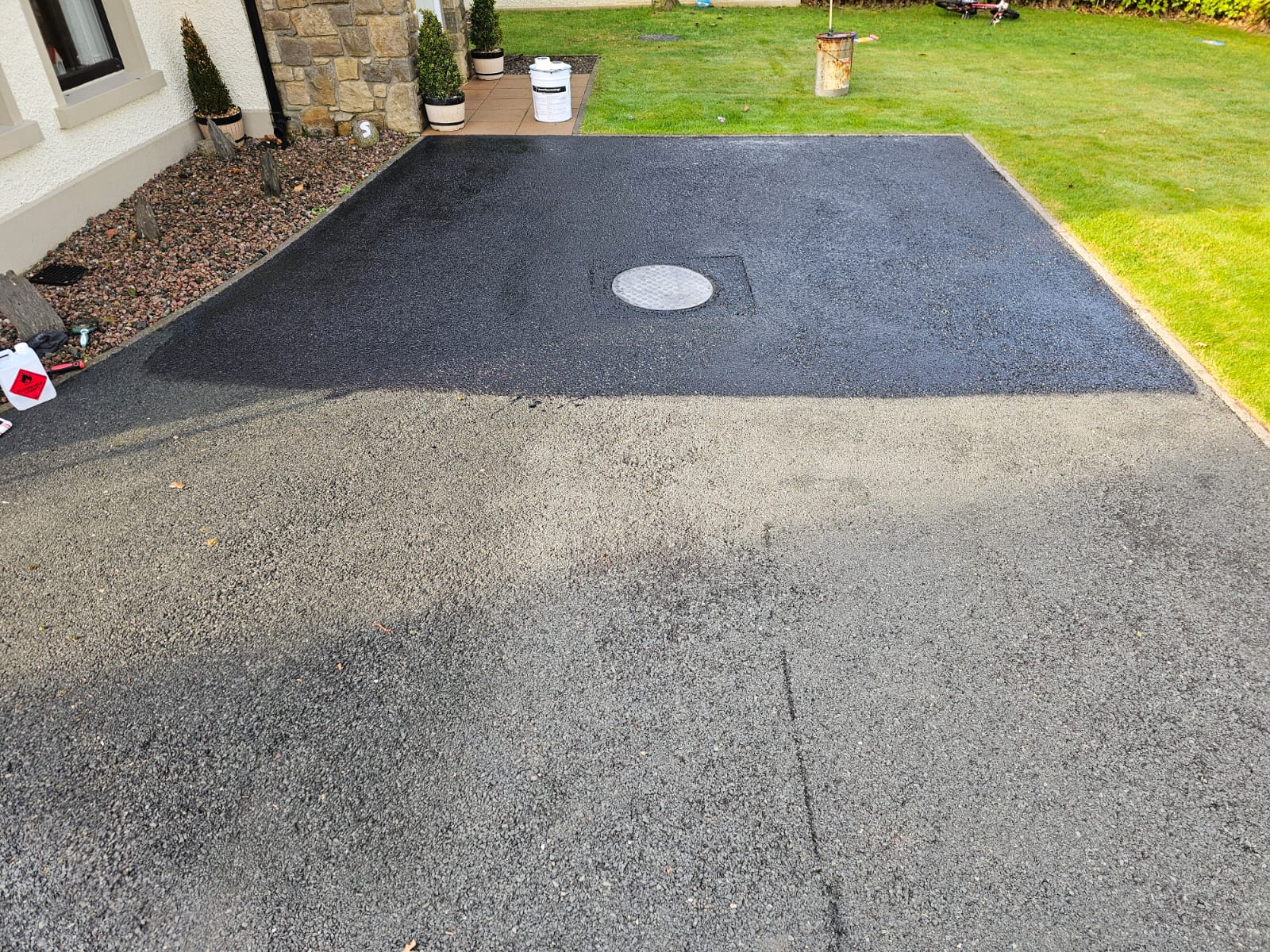
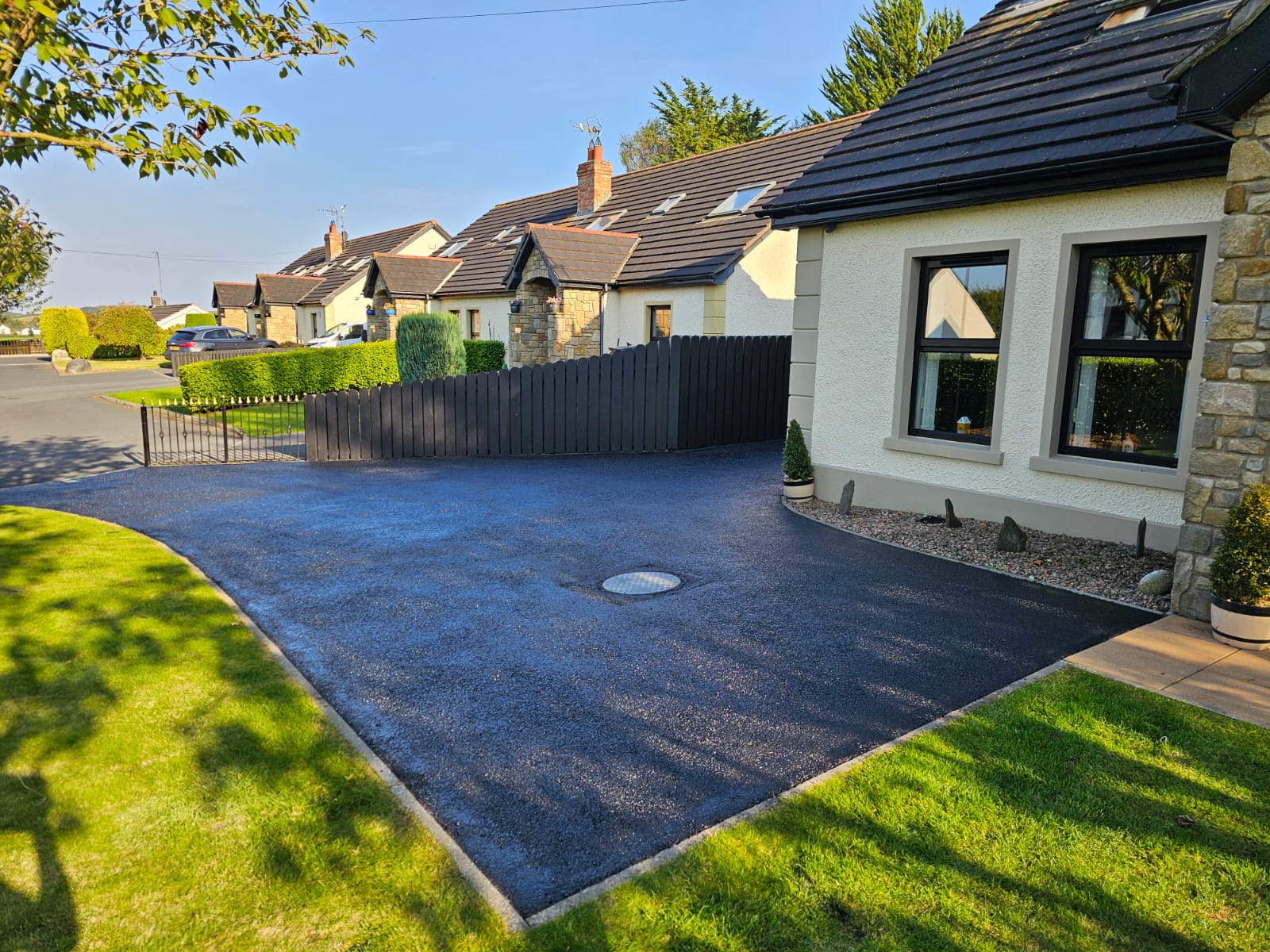
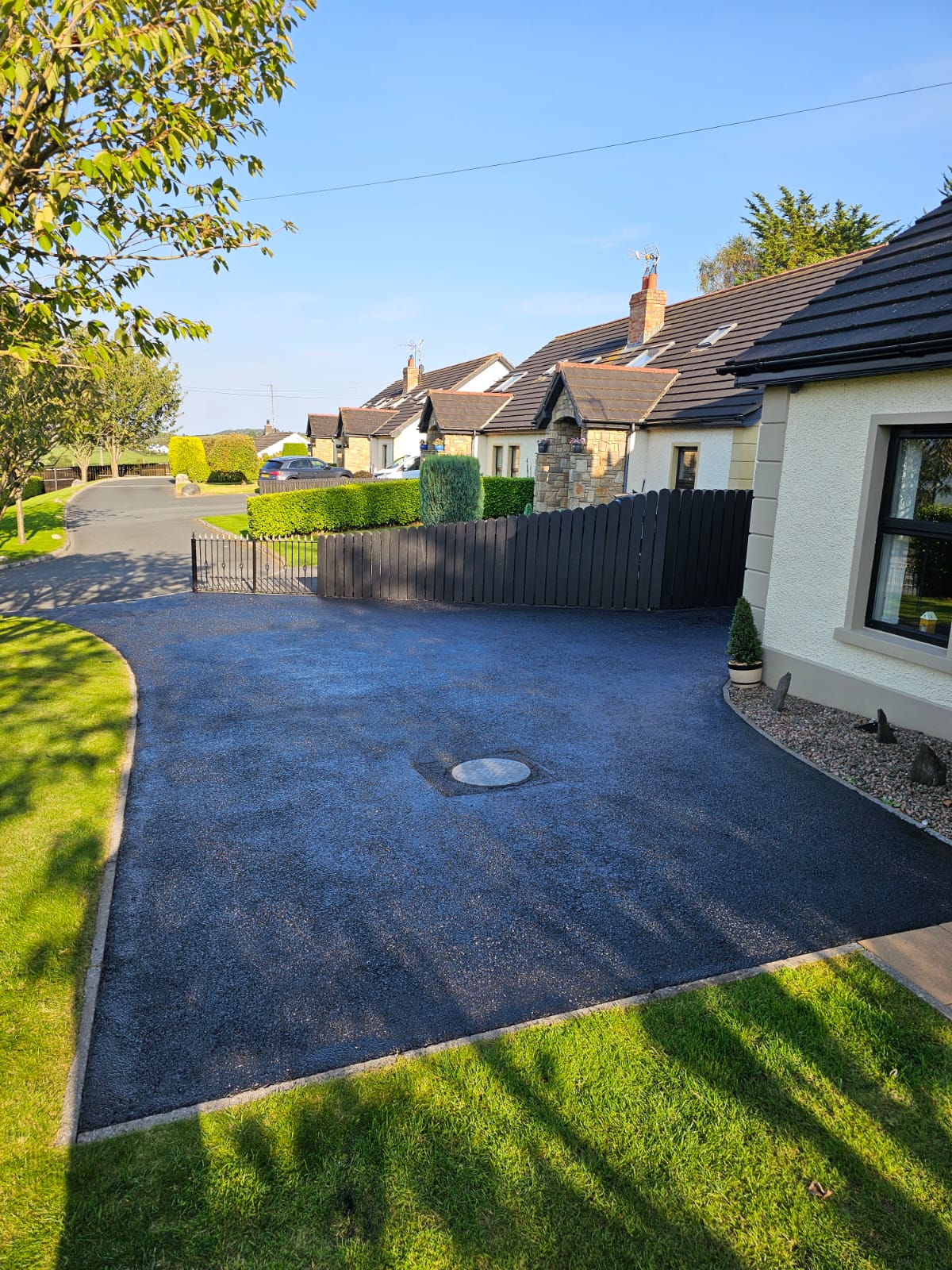
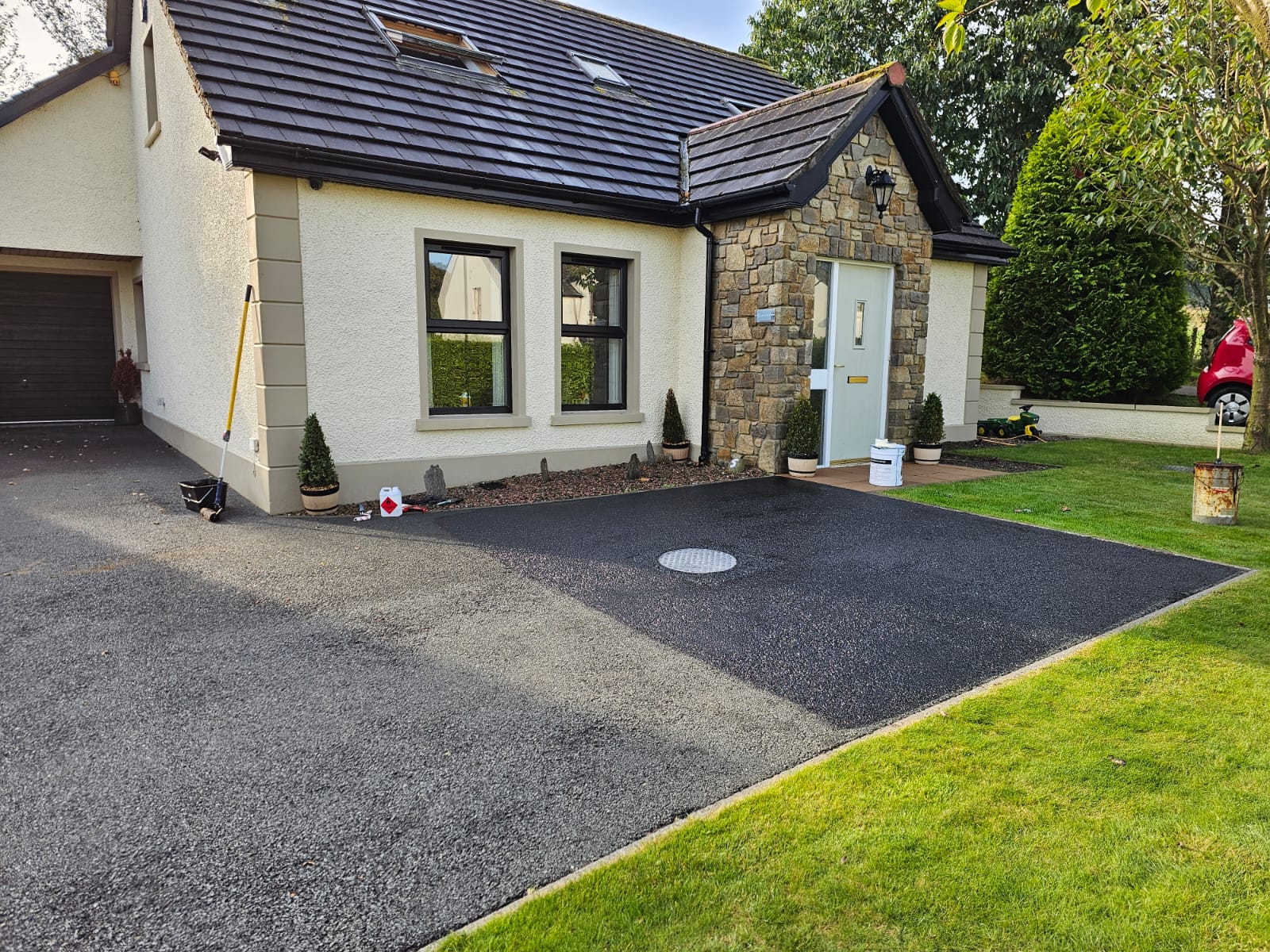
Tarmac restoration from our own jobs around Downpatrick and further out across the county.
Finishing the Front of the Property
A restored drive raises the standard of everything sitting behind it, which is why most people who book one end up asking about at least one of these.
Questions we get asked
Driveway Restoration Questions
Do you seal driveways outside Downpatrick?
Yes. Downpatrick is where we are based, on the Killough Road, and we take driveway work across County Down along with Belfast, Lisburn and Newry. Outdoor work is grouped by forecast rather than by postcode, so a drive further out usually gets booked into the same settled run as others in that direction.
How do you work out a price for a driveway?
By measured area first and condition second. A drive that only needs killing off, washing and sealing prices very differently to one carrying crack repairs, potholes and a fuel patch. Send us the rough dimensions and a photograph of the worst corner and you will have a guide figure before anyone travels out.
Are you insured if something goes wrong on my property?
We are fully insured and the work carries a workmanship guarantee. On driveway jobs the two risks worth naming out loud are run off and overspray, so gullies, kerbs, render and anything planted along the edges are protected before a drum is opened.
How disruptive is it, and where do the cars go?
You lose the drive for the sealing day and for the curing period after it, and that second part is what people underestimate. Arrange somewhere else for vehicles in advance. The washing stage is noisy for an hour or two and throws water about, so keep windows shut and move anything loose off the surface.
When can I drive on it again?
Foot traffic is normally fine within a few hours. Vehicles need considerably longer, and in cooler or damper conditions longer again, so plan on the drive being out of use overnight at the very least. We give you the actual figure on the day, because it depends on the temperature we sealed in.
What time of year should I book this for?
Spring through to early autumn is the reliable window here. Rain on the day is only part of it. Ground temperature, hours of daylight and dew coming down early in the evening all matter too. We would far rather put you into April than take a booking for a November week we already know is wrong.
There are oil stains on my drive. Does that matter?
More than anything else on the surface. Sealer will not bond over oil, so an untreated patch is precisely where the new finish lifts. Contamination is degreased and treated before sealing. Where diesel has soaked in over years the patch may still shadow faintly, and you will hear that from us before we start rather than after.
Can you fill the cracks and potholes at the same time?
Yes, and they have to be done first, because a seal bridges nothing. A crack left open telegraphs straight back through the new surface within weeks. Repairs are quoted as their own line rather than folded into the total, so you can see what is being spent on the repair and what is being spent on the coating.
My driveway sinks and holds water. Will sealing fix it?
No, and this is the job we turn away most often. Ponding, rocking underfoot and cracking that has spread into interlocking plates all point at the base under the tarmac rather than the tarmac itself. That is groundworks. Coating it makes a failing drive look excellent for a season while it carries on failing.
What about weeds and crumbling edges?
Weeds are pulled at the root out of joints and edges rather than strimmed off, because anything left behind pushes back through. Edges are a separate matter. Where the restraint along the side of a drive has gone, that edge will keep breaking away whatever is laid on top of it, and it needs rebuilding rather than sealing.
How long will it look like this, and will tyres mark it?
A sealed drive holds its colour for a few years before it starts greying again, and a sheltered inland drive holds it longer than an exposed coastal one. Tyres are the main early risk. Turning the wheel while the car is standing still on a fresh seal scuffs it, so roll in and roll out for the first couple of weeks.
Request a Free Estimate
Tell us the approximate length and width of the drive, whether there are cracks, potholes or oil patches on it, and where you are in County Down.
Get Your Drive Into a Dry Week
Send us the rough size of your driveway and a photograph of its worst corner. We will tell you whether it wants sealing, repairing or lifting altogether, and we will say so even when the honest answer costs us the job.