
Offices, retail units, hospitality, warehouses and industrial buildings
Commercial and Industrial Painting in County Down
A commercial price is not a domestic price with a bigger number on it. It is built out of areas, coat counts, access and the hours we are allowed on site, because on your building the expensive part is rarely the paint. It is the trading time you would lose while it goes on.
How the number is built
What a Commercial Quote Is Actually Priced On
Ask for a price on a house and the conversation is about rooms. Ask for a price on a unit and rooms stop being a useful unit of measurement. What we cost instead is square metres of each surface type, the number of coats that surface genuinely needs, the access required to reach it, and the shift pattern you want us working. Two identical warehouses can differ in price by a wide margin purely because one of them can be handed over empty for a weekend and the other cannot.
That is why our commercial quotes are broken into phases rather than given as one figure. You can see what the night rate is buying you, what it would cost to do the same area during a normal working day, and where the sensible compromise sits. Plenty of clients end up splitting it, taking the customer facing areas out of hours and letting us have the back of house during the day.
We are based on the Killough Road in Downpatrick and take on work across County Down as well as Belfast, Lisburn and Newry. Coastal industrial premises get a different specification from an inland one on the same drawing. Salt laden air around the Lecale coast and Strangford Lough attacks steel and coated cladding harder, so exposed exterior steelwork near the water is specified for that rather than treated as an ordinary painted surface.
The Line Items You Should Expect to See
- Surface areas by type, walls, ceilings, steelwork, cladding and joinery costed separately because they take different systems
- Coat count and product, stated on the quote, so a cheaper competing price can be compared honestly rather than on the bottom line
- Working hours, day, evening, night or weekend, priced so you can see the cost of protecting your trading time
- Access provision, towers, podiums or platforms, including who is providing them and how long they are on site
- Phasing and handback, which areas come out of use, in what order, and when each one is back in service
What We Will Tell You Not to Buy
If a wall is being knocked out in six months, coat it once and cheaply. If a floor is due for replacement, do not pay for the skirting to be sprayed first. We would rather price the work in the order it makes sense to do it and lose part of the job than sell you a full specification that a fit out is going to demolish.
Trading through the work
Painting a Building That Is Still Open for Business
The hardest part of most commercial jobs has nothing to do with painting. It is getting the work done without your staff, your customers or your production line noticing more than they have to. That is a scheduling and materials problem, and it gets solved before anyone opens a tin.
Evenings, Nights and Weekends
For retail, hospitality and offices this is usually the answer. We come in after close, work through, and have the area clean and back in use before you open. It costs more per hour and almost always less overall, because nothing is lost in takings or in staff standing around. Key holding and alarm arrangements are agreed in writing before the first shift.
Working in Phases
Where round the clock working is not practical, we take the building in sections. One floor, one wing or one aisle at a time, screened off, with a clear route for your people around it. You get the running order in advance so you can move desks, stock or staff once rather than repeatedly.
Odour and Occupied Premises
Solvent smell is what generates the complaints in an occupied building, not dust. Modern water based systems have cut that down enormously, and for offices, treatment rooms, classrooms and food areas they are usually the right call even where a solvent product would be marginally tougher. Where a solvent system genuinely is needed, that work goes into the out of hours phase with ventilation planned for it.
Shopfronts and Signage
A shopfront is a masking job before it is a painting job. Glazing, signage, lighting, security shutters, door furniture and the pavement all have to be protected, and a fascia sign is masked around rather than painted up to and hoped for. If signage is being replaced anyway, tell us, because it changes the sequence and it can take money off the price.
From enquiry to handback
The Way a Contract Runs on Your Site
Commercial work carries more process than domestic work, and that is not paperwork for its own sake. It is what lets you hand a live building over to a contractor and get it back in the state you expect, on the day you were told.
- Step 1
Site walk and scope
We walk the building with whoever will be managing us, agree what is in scope and what is deliberately out, and note the constraints. Trading hours, deliveries, fire routes and anything that cannot be moved.
- Step 2
Written proposal by phase
You get areas, systems, coat counts, access and shift pattern set out phase by phase, so the price can be interrogated rather than accepted. Sign off what you want and leave the rest.
- Step 3
Documentation before mobilisation
Risk assessment and method statement, insurance certificate and product data go to your facilities or health and safety contact ahead of the start date, not on the morning.
- Step 4
Set up and protect
Floors, plant, stock, IT equipment and fixtures are covered and screened before anything begins. On a live site the protection is the part your people will judge us on.
- Step 5
Work the phase and clean down
Each phase is finished and cleaned down within its own window. Areas are handed back usable rather than half done with kit left in the corner until we return.
- Step 6
Joint inspection and sign off
We walk each completed phase with your representative and deal with the snag list before invoicing it, so the last phase is not carrying defects from the first one.
Industrial Units Are a Steelwork Problem First
A warehouse or production building is not a big office. The surfaces that decide the job are structural steel, profiled metal cladding and concrete, and each of those behaves differently from plaster. Preparation is the whole game, because a coating on steel is doing a protective job and not a decorative one, and rust under a fresh finish keeps working whether you can see it or not.
- Structural steel and portal frames. Existing rust is removed back to sound metal and primed for steel. Painting over corrosion buys a season and costs you the section later.
- Profiled metal cladding. Large, exposed, and often chalked hard by ultraviolet. It needs washing back and a system chosen for coated metal, not a masonry paint applied at volume.
- Plant rooms, tanks and pipework. Colour coding, heat and contact with product all change what can be used, so tell us what the pipe carries before we specify anything.
- Ceiling voids and roof steels. These are usually the reason a unit needs night working, since spraying at height means nothing can be underneath it.
- Floor and line marking. If your unit needs floor coating or bay and walkway marking, say so at enquiry stage. It is a separate discipline with its own products and its own cure times, and we will tell you plainly whether it is in scope for us on your job or better placed with a specialist.
Height, access and liability
Reaching It Safely Is Half the Programme
On a domestic job access is a ladder and a set of steps. On a commercial job it is a line in the programme with a cost, a permit and a method behind it. A warehouse ceiling at eight metres, an atrium, a stairwell over three floors or a shopfront above a public footpath all need the right platform and the right exclusion zone underneath, and none of that is improvised on the day.
The same goes for insurance. We are fully insured and we send the certificate to your facilities contact before we mobilise rather than when somebody asks. On a live commercial site the realistic risks are not dramatic ones. They are overspray reaching a car park, a wet floor in a public route, or a contractor propping a fire door open. Those are the things a method statement is actually for, and they are the things we plan around.
What We Need From You
- A single point of contact who can make a decision on the night without a phone tree
- Access arrangements in writing, keys, codes, alarms and who is responsible for locking up after a shift
- Notice of anything that cannot be isolated, live plant, servers, cold rooms, refrigeration or anything running around the clock
- Your own site rules and induction up front, so our documentation is written to match yours rather than corrected later
- Honest trading hours, including the quiet days, because a genuinely quiet Tuesday is cheaper for you than a Saturday night
Multi Site and Brand Colours
If you run more than one premises, the colour has to be identical across all of them, and that means working from a reference rather than a memory. We mix to RAL, British Standard, BS 4800 and NCS references, and we record what was used on your job so the second and third site match the first exactly. Bring us the brand guideline or a physical sample, not a colour name from a supplier catalogue.
Commercial Work Around County Down
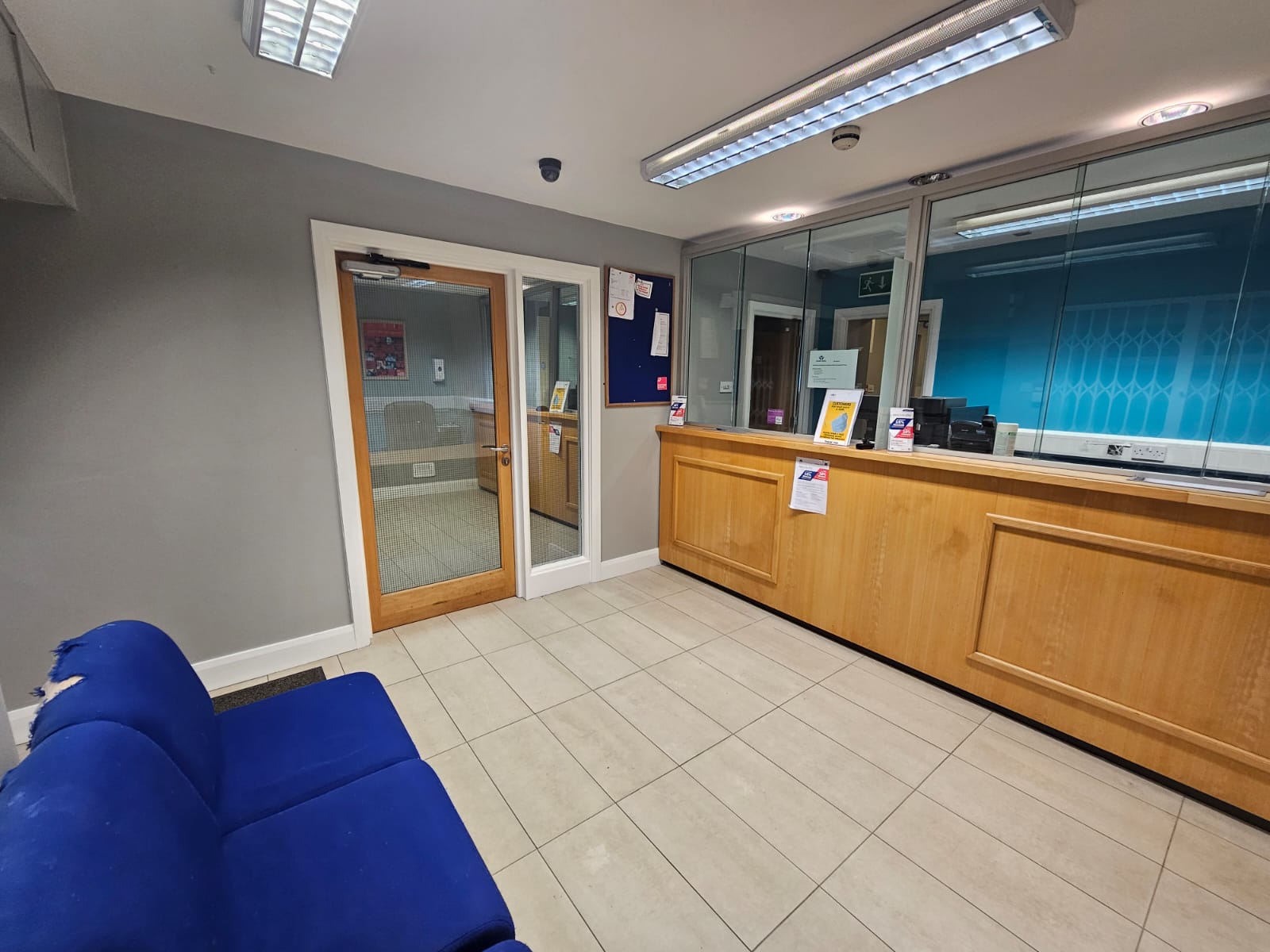
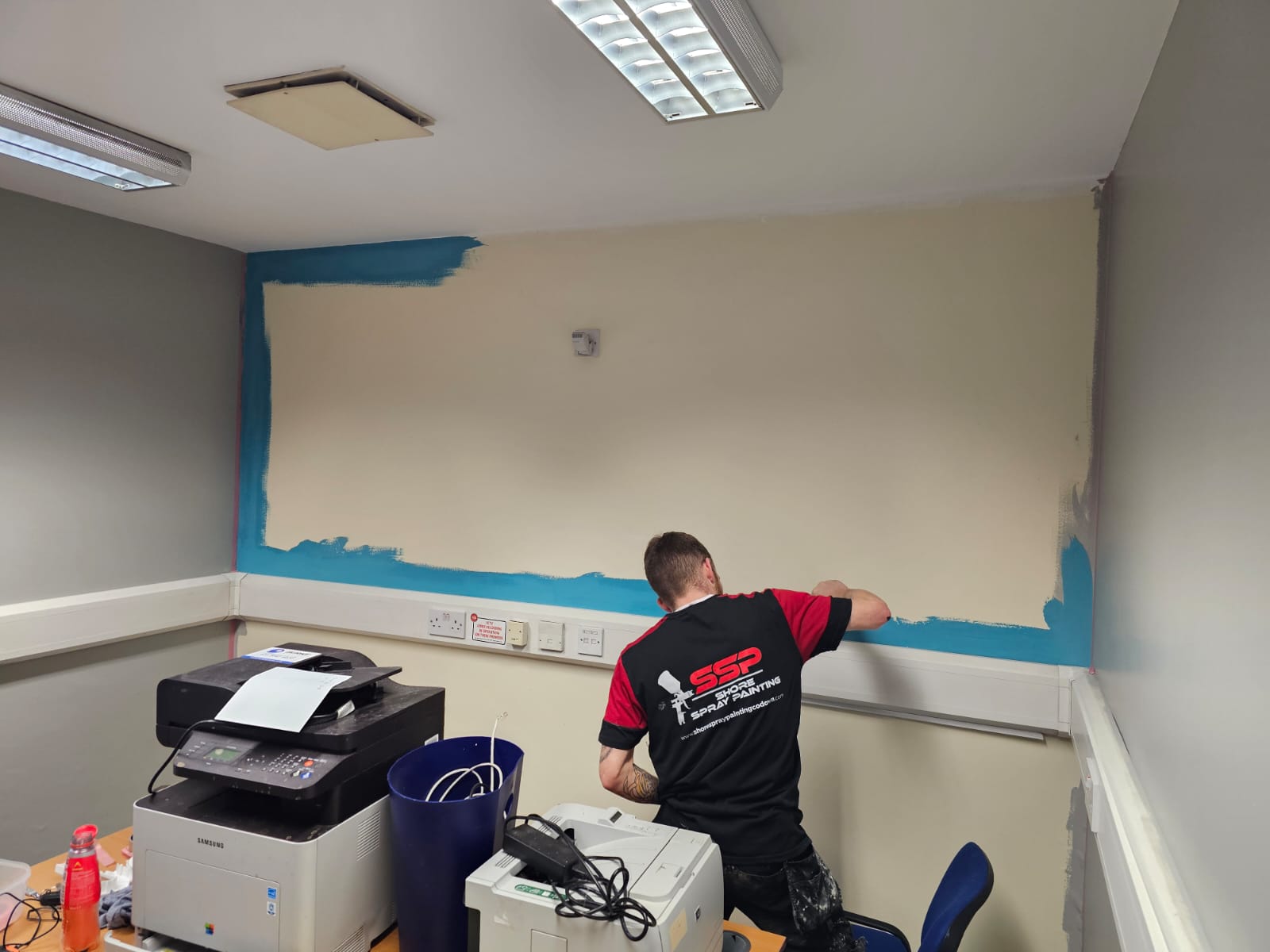
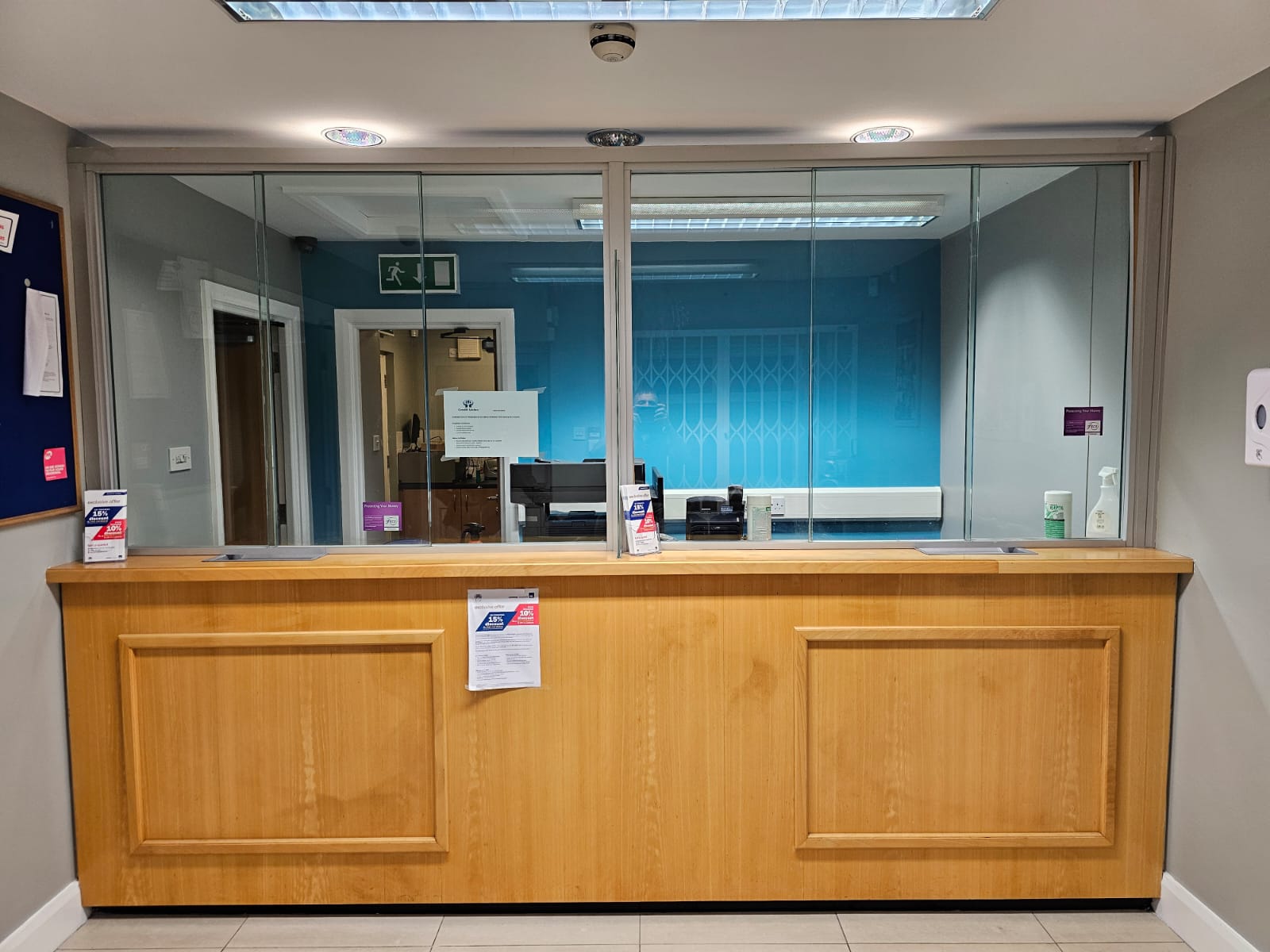
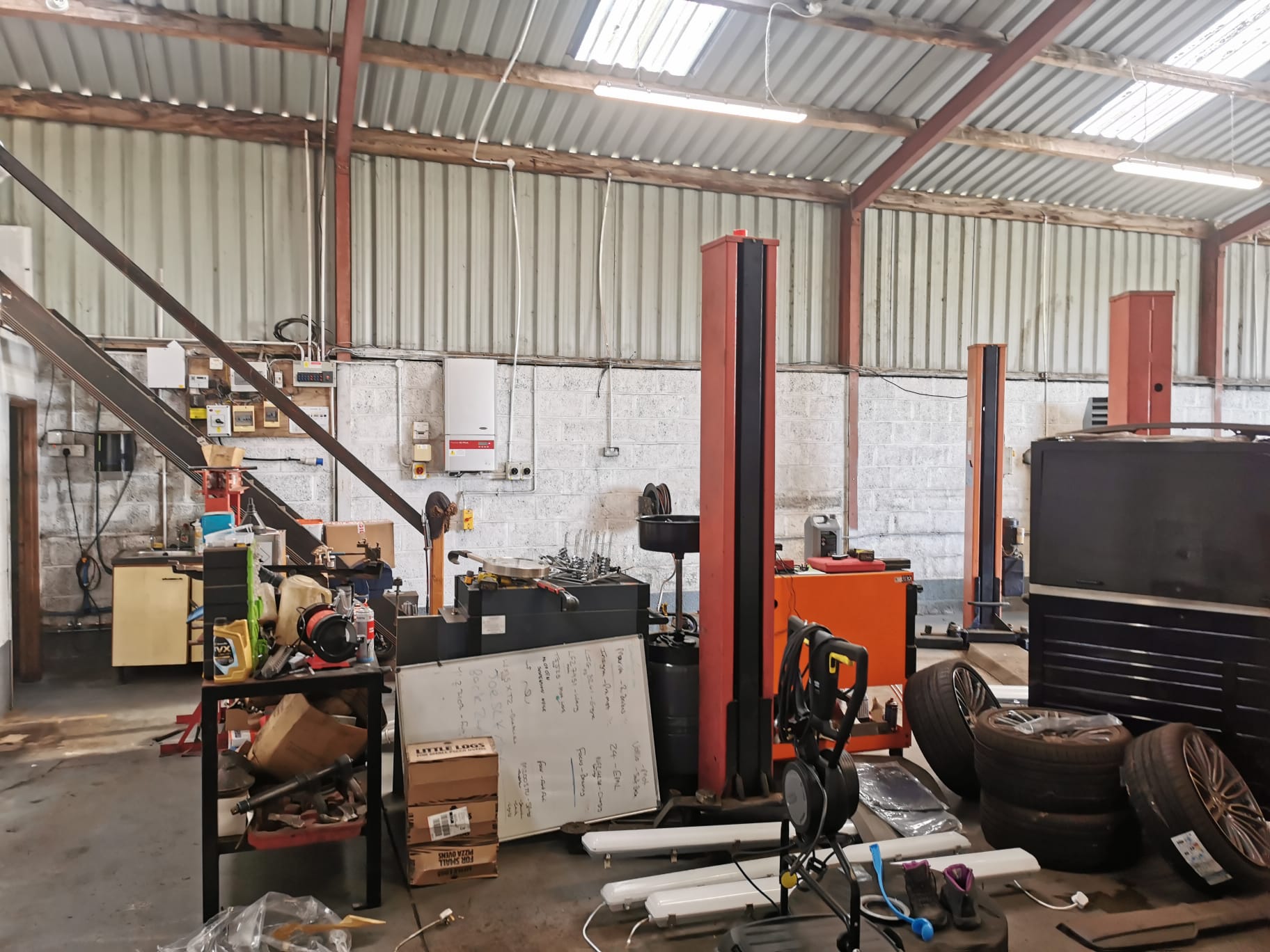
Trading premises and industrial buildings from our own contracts.
Related Work on Commercial Property
These are the services most often added to a commercial contract, and grouping them into the same shutdown is cheaper than three separate mobilisations.
Questions we get asked
Commercial Painting Questions
Where will you travel to for commercial contracts?
County Down is our home ground, worked from Downpatrick, and we take contracts in Belfast, Lisburn and Newry as standard. For multi site clients the travel matters less than the shift pattern, since a run of night shifts across several premises is easier to programme than a series of scattered day visits.
What do you need from us before you can quote?
Floor areas or a plan if you have one, the surface types involved, your trading hours, and any access restrictions. Photographs of the worst areas help. We then walk the site, because a plan will not tell us that the ceiling is nine metres up or that half the wall is behind racking that cannot be moved.
What insurance do you carry for work on a live site?
Shore Spray Painting Co Down is fully insured and the certificate goes to your facilities or health and safety contact before we mobilise. We also give a workmanship guarantee. If your organisation has a minimum cover level or an approved contractor process, send it with the enquiry so it is dealt with early.
Can we stay open while you are working?
In most cases yes, which is the entire reason we phase the work. Areas are screened, routes stay clear, and the loudest and most disruptive stages are moved outside your busy hours. What we will not do is pretend that spraying a ceiling above a working shop floor is possible, because it is not.
How quickly can an area go back into service?
Water based systems in an office or retail space are usually ready for people the same night they are finished, which is why the shift is timed to end well before you open. Coatings on industrial floors and steelwork have longer cure times, and those are stated in the programme so nothing gets loaded or trafficked too early.
Do you actually work nights and weekends?
Yes, and for retail and hospitality it is often the only sensible way to do it. The rate per hour is higher and the total cost to your business is usually lower once lost trading is counted. Key holding, alarm codes and lock up responsibility are agreed in writing before the first shift starts.
Will you provide risk assessments and method statements?
Yes, written for your site rather than a generic document with your name typed in. If you have your own permit to work system, induction or contractor rules, send them at enquiry stage so ours are written to match. It saves a delay on the mobilisation date.
How do you deal with working at height in a warehouse?
With the right platform for the height and the floor, an exclusion zone underneath, and nobody else in that zone while it is live. That is normally why high level work lands in a shutdown or a night shift. Reaching a roof steel off something borrowed is not a saving, it is a liability.
Can you coat metal cladding and structural steelwork?
Yes. Both need preparation appropriate to metal rather than to a wall. Cladding is washed back through any chalked surface layer, and steel is taken back to sound metal wherever corrosion has started before a primer suited to steel goes on. Coating straight over rust is the fastest way to pay for the same job twice.
Do you offer floor coating and line marking?
Ask us at enquiry stage and we will give you a straight answer for your building. Floor systems and bay marking are a separate discipline with their own products, surface preparation and cure windows, and they are not simply painting a floor. Where it is not the right fit for us we will say so rather than take it on.
Can you match our corporate colours across several premises?
Yes. We mix to RAL, British Standard, BS 4800 and NCS references and record exactly what was used on your first site, so the next one matches rather than being close. Send the brand guideline or a physical sample. Colour names from a supplier catalogue vary between manufacturers and are not a reliable reference.
Request a Free Estimate
Give us the type of premises, rough floor areas, your trading hours and where in County Down you are, and we will arrange a site walk.
Price Up Your Premises
Tell us the building, the surfaces and the hours we would be allowed on site. We will come back with a phased written proposal showing what each option costs you in money and in downtime.