
Homes, businesses, kitchens, uPVC, tarmac, airless and HVLP
Spray Painting and Decorating Services in County Down
Seven services sit under this page and only two of them describe a piece of equipment. The rest describe a surface, which is the honest way round, because the material you are asking us to coat decides everything that comes after it. Tell us what the thing is made of and we can tell you which page you actually need.
Start with the surface
What You Are Coating Decides Everything Else
People usually arrive with a room, an elevation or a driveway in their head and a service name they are not certain about. Work from the object rather than the label. A door made of vinyl wrapped board, a frame made of uPVC and a drive made of stone and bitumen have almost nothing in common beyond the fact that all three can be sprayed. Each one wants a different preparation, a different primer and a different set of conditions to go on in.
That is why these pages are split the way they are. Three of them are about a setting, which is a home, a business or a kitchen. Two are about a material that behaves in its own particular way, which is uPVC and tarmac. Two are about the equipment. You never have to choose the equipment, because that is our call, and those pages exist only because people quite reasonably want to know what is being wheeled up their driveway and why.
The other thing worth saying at the top of a page like this is what we turn down. A driveway coming apart from the base, a vinyl door already peeling at a corner, a window with a blown unit sitting behind the frame. Coating any of them hides a fault for a season and makes the eventual repair messier and dearer. We would rather lose the job at the survey than argue about it eighteen months later.
Three Questions That Point You at the Right Page
- What is it made of? Timber, MDF, vinyl wrap, melamine, uPVC, render, metal cladding or tarmac. That single answer sets the primer, the system and most of the price.
- Is something already failing underneath it? Damp, rot, a lifted wrap, a dropped sash, a sunken base. Faults get fixed first or the job is not worth doing at all.
- Who has to keep living or trading around it? A family kitchen, an occupied house and a shop that cannot close all schedule and price differently even at the same square metreage.
- Does it live outdoors? Anything exterior is a weather job, which means dates that move with the forecast rather than dates fixed for our own convenience.
The Seven Services
Each page goes into the preparation, the working constraints and the honest limits of that one service. None of them is the same paragraph with a different noun dropped into the middle of it.
Making the call
Coat It or Replace It, and What to Group Together
Two questions come up on almost every survey. The first is whether a thing is worth coating at all. The second is what else should be done while we are already set up, because the setting up is a real and unavoidable part of what you pay for.
When Coating Is Clearly the Better Buy
The structure is sound and only the surface has aged. Carcasses square and solid, frames still operating properly, glazing intact, tarmac firm underfoot. In that condition you are buying a finish rather than a replacement, the saving against new is large, and the conversation is usually a short one.
When Replacement Is the Honest Answer
A door swollen at the bottom from a leak, a wrap already lifting, a sash that has dropped, a drive that rocks when you stand on it. Those are structural, and a coating over any of them is a cosmetic delay. We say so at the survey, and we say it before we have quoted rather than afterwards.
Which Spray System Is Our Problem
One system moves a lot of material onto a large area quickly and builds a thicker film. The other atomises a much finer coat with far less airborne mist, which is what detailed work indoors needs. Plenty of properties see both inside the same week. You do not have to specify it and the choice does not change your price.
Worth Adding to the Same Visit
The masking, the containment and the travel are already paid for. Fitted wardrobe doors alongside a kitchen, fascias and a garage door alongside window frames, interior doors while the kit is out of the van. Added at the time, these cost a fraction of what the same work costs as its own booking later in the year.
Better Kept Apart
Anything wanting a different weather window. Exterior work waits for dry, settled days. Interior work does not care what the sky is doing. Running both at once usually means one of them gets pushed into conditions it should not have been in, so we would rather sequence them properly than overlap them.
The Order to Do a Whole Property In
If you are refreshing everything, the driveway goes last. Render, fascias, frames and gutters all sit above it, and every one of those jobs drops something. Sealing a drive first and then working over the top of it is the most common way we see good work spoiled.
What the Coverage Area Means in Practice
We cover Downpatrick, Belfast, Lisburn, Newry and the wider County Down area. That is an honest boundary rather than a radius drawn to look impressive, and in day to day terms it matters less than two other things, which are access and weather.
- Downpatrick and the Lecale coast is home ground. Ardglass, Killough, Strangford and the roads between them are a short run for us, so a survey out that way is usually easy to slot in.
- Belfast, Lisburn and Newry are routine. They are quoted on the same basis as a job five minutes from the yard, not as a favour with travel loaded onto the end of it.
- Exterior jobs are grouped by forecast. Outdoor work in one direction tends to be booked into the same settled run, which is why an exterior date is offered as a week rather than as a morning.
- Access changes a day more than mileage does. A terrace with no off street parking, a tight side return or a shared entry affects the programme far more than another twenty miles of road.
- If you sit just beyond that list, ask anyway. The answer depends on the size of the job and on what else we already have running in that direction that month.
Work From Across the Services
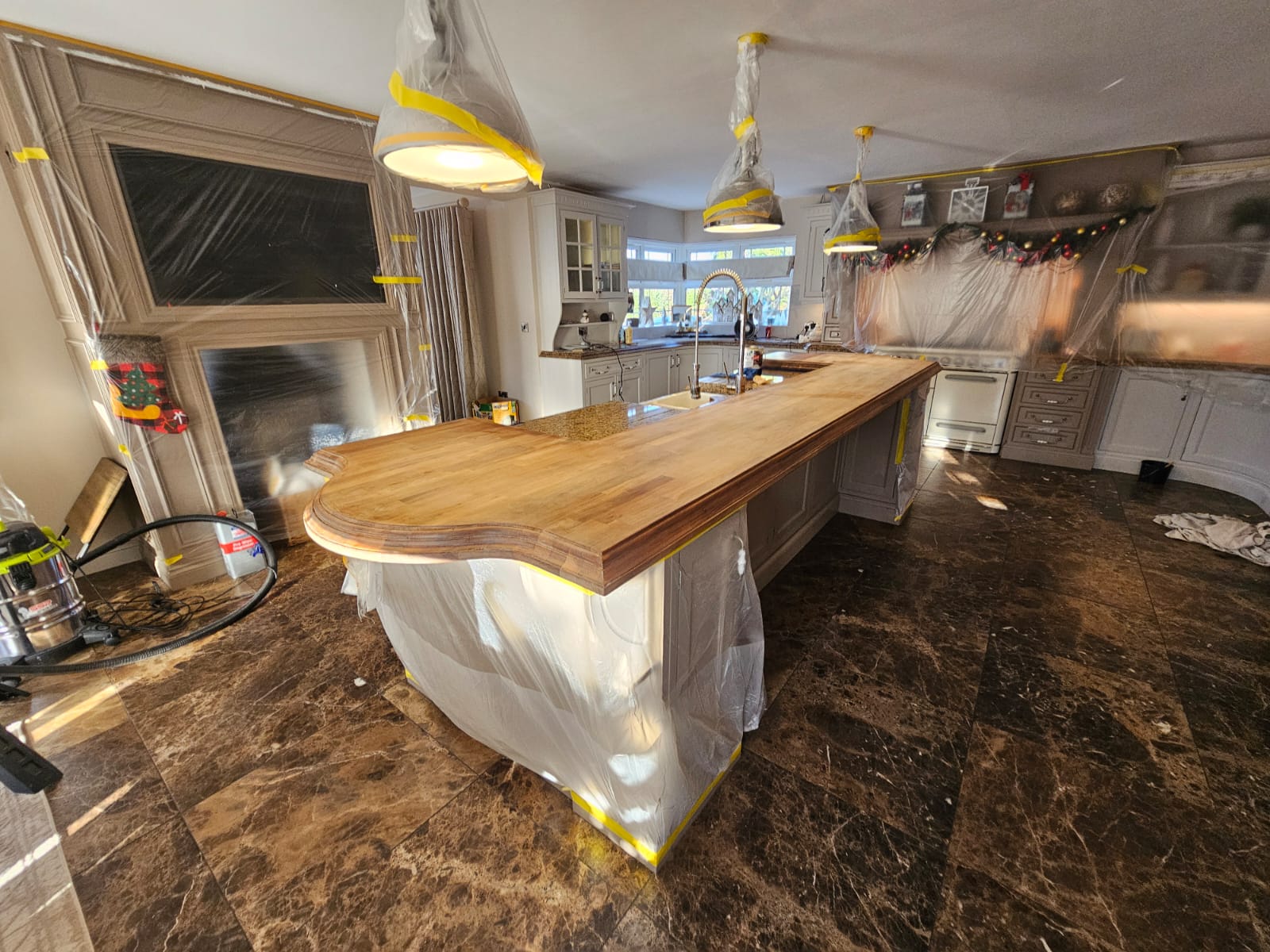
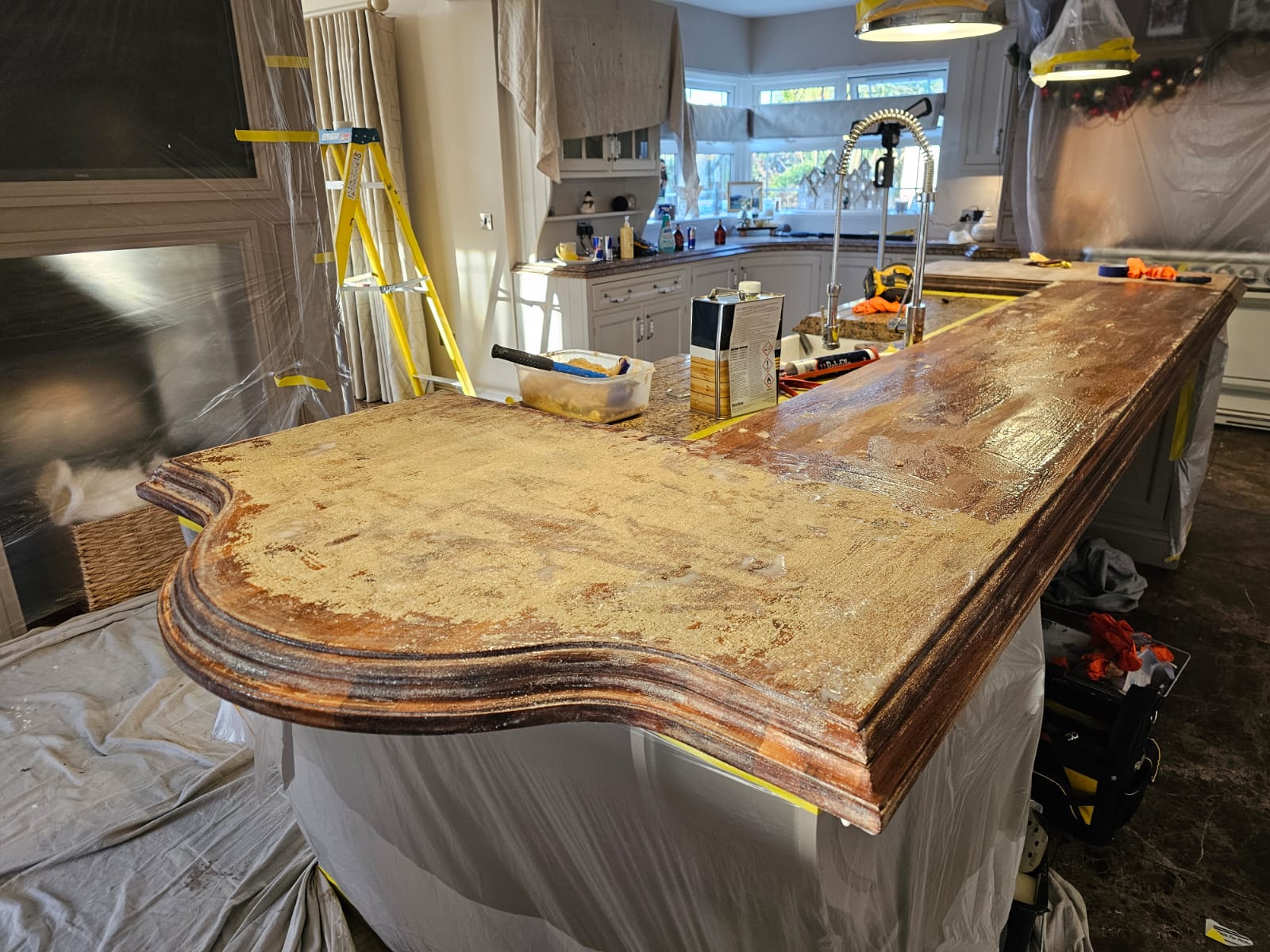
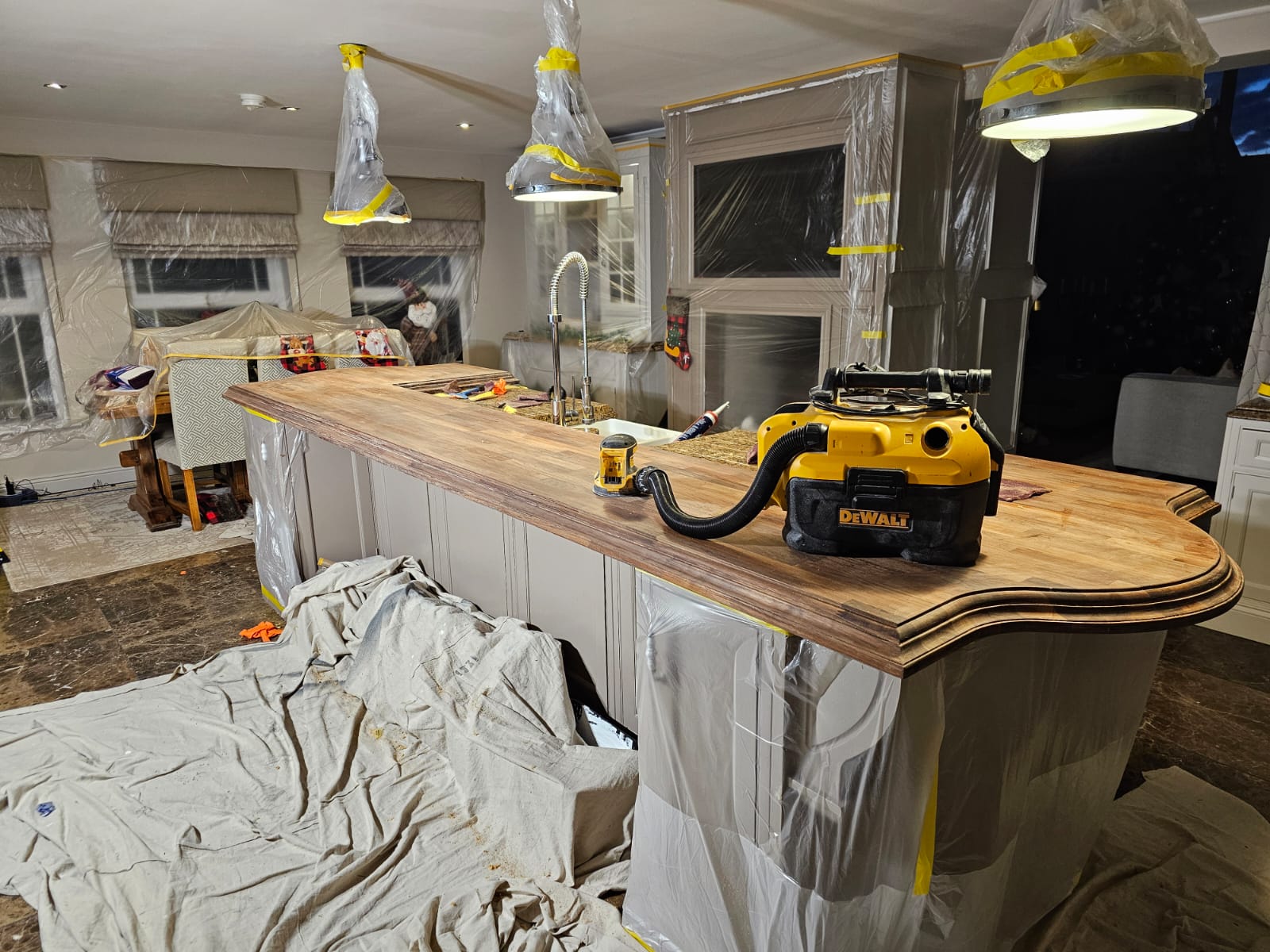
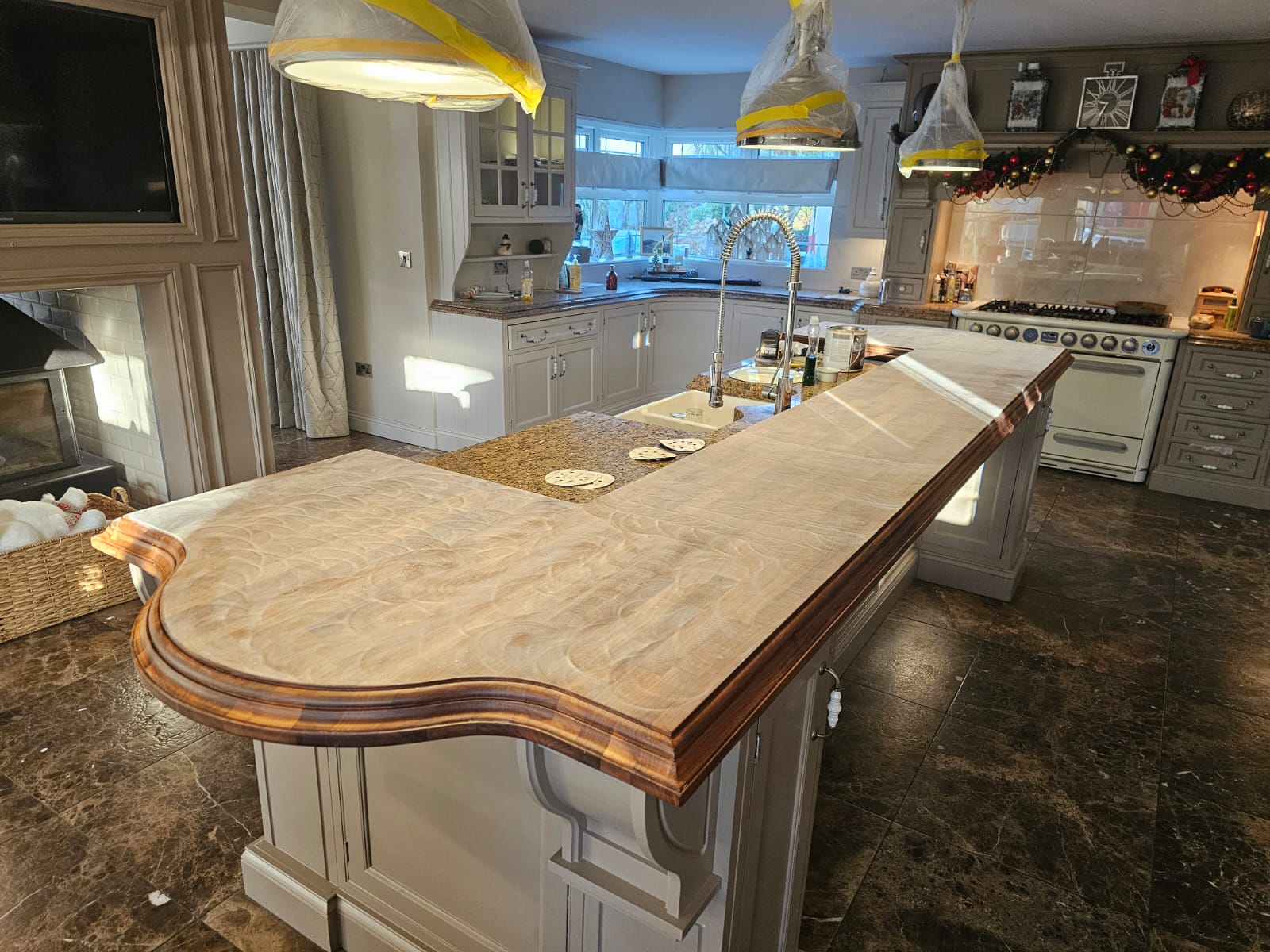
A cross section of finished jobs rather than one trade, because most of the properties we visit end up wanting more than a single service.
Working with us
From First Message to the Snagging Walk
The process is the same whichever service you land on. What changes is what we are looking at while we are standing in front of the thing, and how much of the week the weather gets to decide.
- Step 1
Send photographs, not a service name
Message us on WhatsApp with pictures of the thing itself plus a wider shot for context. A close up of a door edge, a corner of a window frame or the worst square metre of a drive tells us more than a paragraph of description ever will.
- Step 2
A guide figure first
For most jobs we can put a realistic range on it from photographs before anyone travels anywhere. That saves you an appointment if the number turns out to be nowhere near what you had in mind.
- Step 3
The survey
We identify what the surface is made of, test for the faults that would sink the job, look at access, parking and protection, and agree colour and sheen with you in the real light of that room or that elevation.
- Step 4
A written price with days on it
You get the colour reference, the sheen level, what is included, what is excluded and how many days it takes, in writing. Most residential work runs to one to three days, and where it runs longer we tell you what is making it longer.
- Step 5
Protection before paint
The first working day is largely masking, sheeting and containment. It is the least interesting part of the whole job and it is the part that decides whether you have a good week or a bad one.
- Step 6
Coats, curing and the walk round
Colour goes on in thin passes with proper flash off in between. At the end we walk the job with you, deal with your list, and record the colour and sheen so that a touch in two years from now still matches.
Questions we get asked
Choosing a Service and Working With Us
How do I work out which service I need?
Start from the material rather than the service name. Tell us what the surface is made of and whether it lives inside or outside, and the right page follows from that on its own. If you are still unsure, send a photograph. It takes us longer to read a description of a door than to look at one.
How do I decide between coating something and replacing it?
Ask whether the fault is on the surface or in the structure. Faded, tired, dated or simply the wrong colour is a coating problem, and coating wins on cost every time. Swollen, rotten, dropped, blown or sinking is a structural problem, and painting it only postpones the repair while making it messier.
What happens at a survey, and does it cost anything?
It is free and on most domestic jobs it takes under an hour. We identify the substrate, hunt for the faults that would undermine the work, check access and protection, and agree colour and sheen with you on site. You get a written price afterwards rather than a figure said out loud at the door.
How is the price actually built up?
Area, condition, preparation and the hours we are allowed to work in. Preparation is normally the largest single share, which is why two jobs of the same size can come back as quite different numbers. Nothing here is a day rate guessed at and then rounded upwards.
How soon can you start and how long will it take?
Interior work can often be scheduled within a few weeks. Exterior work depends on the season and the forecast, and the spring to autumn window fills up early. Most residential jobs are one to three days on site once we begin, and anything beyond that is stated as a number of days on the quote.
How far do you travel, and does distance change the price?
Downpatrick, Belfast, Lisburn, Newry and the wider County Down area. Distance is rarely the thing that moves a figure. Access, parking, protection and how many hours a day we can work are what move it, and a job ten minutes away with nowhere to park can cost more than one an hour up the road.
What does the workmanship guarantee actually cover?
We are fully insured and we guarantee our own workmanship, meaning the preparation and the application. It does not cover a substrate we advised against coating in the first place, which is one more reason those warnings go into the written quote rather than being mentioned in passing.
Can you match an exact colour?
Yes. We mix to RAL, British Standard, BS 4800 and NCS references. If you are matching something physical, such as an existing door, a range cooker or a neighbour's frames, give us the object or an offcut rather than a colour name, because names get reused across manufacturers for different shades.
Do I need to be there while the work is done?
For most exterior work, no, provided we have access to the elevations and to an outside tap. For interior work we need access to the rooms and we would sooner agree that in advance than ring you on the morning. Either way, you are there at the end for the walk round.
What happens if the weather turns on a booked exterior job?
We move it, and we tell you as early as the forecast allows. Coatings put on in the wrong conditions fail, so a lost day now is cheaper for both of us than a failed finish next spring. Where a job is part indoors and part out, we switch to the indoor half and keep the week productive.
Can you do more than one job on the same property at once?
Yes, and it is by far the cheapest way to buy the second one. Travel, masking, containment and set up are already paid for, so adding wardrobe doors to a kitchen booking, or fascias to a window job, costs a great deal less than arranging it as its own visit months down the line.
Request a Free Estimate
Tell us what the surface is, whether it lives inside or outside, and where you are in County Down. We will come back with a guide figure and a realistic date.
Tell Us What Needs Coating
Send a photograph of the surface and a wider shot of where it sits. We will tell you which service it falls under, roughly what it costs, and whether coating it is honestly the right answer at all.