
Cabinet doors, drawer fronts, end panels and frames
Kitchen Respraying Across County Down
A respray only holds if the preparation matches what your doors are actually made of. We test the substrate first, then build the coating around it, so the finish still looks right after two years of kettles, oven doors and school mornings.
What the job really involves
Respraying That Survives a Working Kitchen
Almost every kitchen respray that fails does so for the same reason, and it is never the paint. It is contamination. The area above a hob and the two doors either side of it carry a film of cooking oil that has been baking on for years. Solvent alone lifts it and spreads it. We degrease with a dedicated cleaner, rinse, and only then start keying, because a coating laid over that film peels off in sheets at the first knock.
The second thing that decides the outcome is what the door is made from. A vinyl wrapped MDF door, a factory painted MDF door, a solid oak frame and a melamine faced panel all take a different primer, and three of the four cannot be treated the same way. We check every door on the survey rather than quoting from a photograph of the room.
We work across County Down from a base on the Killough Road in Downpatrick, and we cover Belfast, Lisburn and Newry as standard. Kitchens near the Lecale coast get one extra consideration, which is humidity. Salt laden air and a cold utility room raise the risk of blooming in a solvent finish, so on coastal properties we schedule spraying for the warmer part of the day and extend the flash off time between coats rather than pushing to finish in one visit.
What Gets Sprayed
- Cabinet doors and drawer fronts, hinges and handles removed, edges and rebates sprayed rather than brushed in
- Carcass frames and visible edges, sprayed in place behind full containment
- End panels, plinths and cornice, so the run reads as one piece instead of a patched repair
- Islands and breakfast bars, including the return sides people forget to quote for
- Bedroom, bathroom and utility furniture in the same visit, since the set up cost is already paid
What We Do Not Spray
Worktops, sinks and appliances are masked, not coated. Laminate worktop paint exists, but it does not stand up to a chopping board or a hot pan, and we would rather tell you that at the survey than warranty something we do not believe in. Glass and glazed doors are masked and cut back. If a door is swollen at the bottom edge from a dishwasher leak, it needs replacing before any coating goes near it, and we will say so.
How a respray runs
Six Stages, Usually Across Three Days
Most family kitchens run to three working days. A large island kitchen or a two tone scheme with different colours on wall and base units runs longer, because each colour needs its own masking and its own cure window.
- Step 1
Survey and substrate test
We check door construction, look for vinyl wrap lifting at the edges, and note any water damage. You get a written price with the colour, the sheen level and the number of days on it.
- Step 2
Strip out and label
Doors, drawer fronts, hinges, handles and soft close dampers come off and are numbered so every door goes back on the hinge it came from. Nothing gets mixed up between runs.
- Step 3
Degrease and rinse
The full set is degreased, rinsed and dried. This is the stage that gets skipped on a cheap job and it is the reason a cheap job fails.
- Step 4
Key, fill and prime
Surfaces are abraded to give the primer something to hold, chips and dents are filled, and the primer is chosen for the substrate rather than out of habit.
- Step 5
Spray in coats
Colour goes on in thin, even passes with proper flash off between them. Building a finish in one heavy coat is what causes runs, orange peel and a soft film that marks for months.
- Step 6
Cure, rehang and snag
Doors are left to harden before they are handled, then rehung, aligned and adjusted. We walk the kitchen with you and put right anything on your list before we load the van.
The Substrate Decides the Coating
This is the part of a kitchen quote that separates a finish lasting a decade from one that chips within a season. Ask any painter to name the primer they would use on your doors. If the answer is the same for all four of these, keep looking.
- Vinyl wrapped MDF. The wrap is a film bonded to board. Where it has already lifted at a corner or above the oven it will keep lifting under paint, so those doors are either stripped back or replaced before anything is sprayed.
- Factory painted MDF. The easiest case. It keys and takes primer well, and the only real risk is soft edges where a router cut has drunk in moisture.
- Solid timber and veneered frames. Timber moves. Joints need flexible filler rather than a hard one, or a hairline crack opens along the stile the first cold snap after the job.
- Melamine and high gloss acrylic. Very low surface energy, which is a technical way of saying paint slides off it. These need an adhesion promoter, not a standard undercoat.
- Previously painted doors. We check what is already on there. A water based coating over an old solvent finish that was never keyed is a common inherited problem, and it has to come off, not be buried.
Getting the look right
Colour, Sheen and Living With It
Two kitchens sprayed the same colour can look nothing alike, because sheen level and light do most of the work. Downpatrick and the wider Lecale area has a lot of north facing kitchen extensions, and a flat matt in a north facing room reads grey and cold no matter what the tin says.
Choosing a Sheen
A satin or eggshell level sits in the sweet spot for kitchens. It wipes clean without showing every fingerprint, and it does not flare under downlights the way a full gloss does. Matt looks superb in a photograph and is harder work to keep clean around handles and the bin cupboard.
Two Tone Schemes
Darker base units with lighter wall units is still the most requested scheme we quote. It costs more than a single colour because each tone needs its own masking cycle and its own cure window, so build that into the timeline rather than being surprised by it.
The First Fortnight
A sprayed finish is touch dry quickly and fully hard much later. For the first two weeks, close doors rather than swinging them, keep sticky mats and rubber backed items off the surfaces, and clean with warm water and a soft cloth instead of a kitchen spray.
Rented and Listed Property
If you are a landlord, agree the colour in writing with the letting agent before we start, since a respray is not something a tenant can undo. If your property is listed or sits inside a conservation area, internal decoration is normally outside the consent regime, but anything structural to the kitchen may not be, so check with your district council before committing.
Kitchens We Have Sprayed
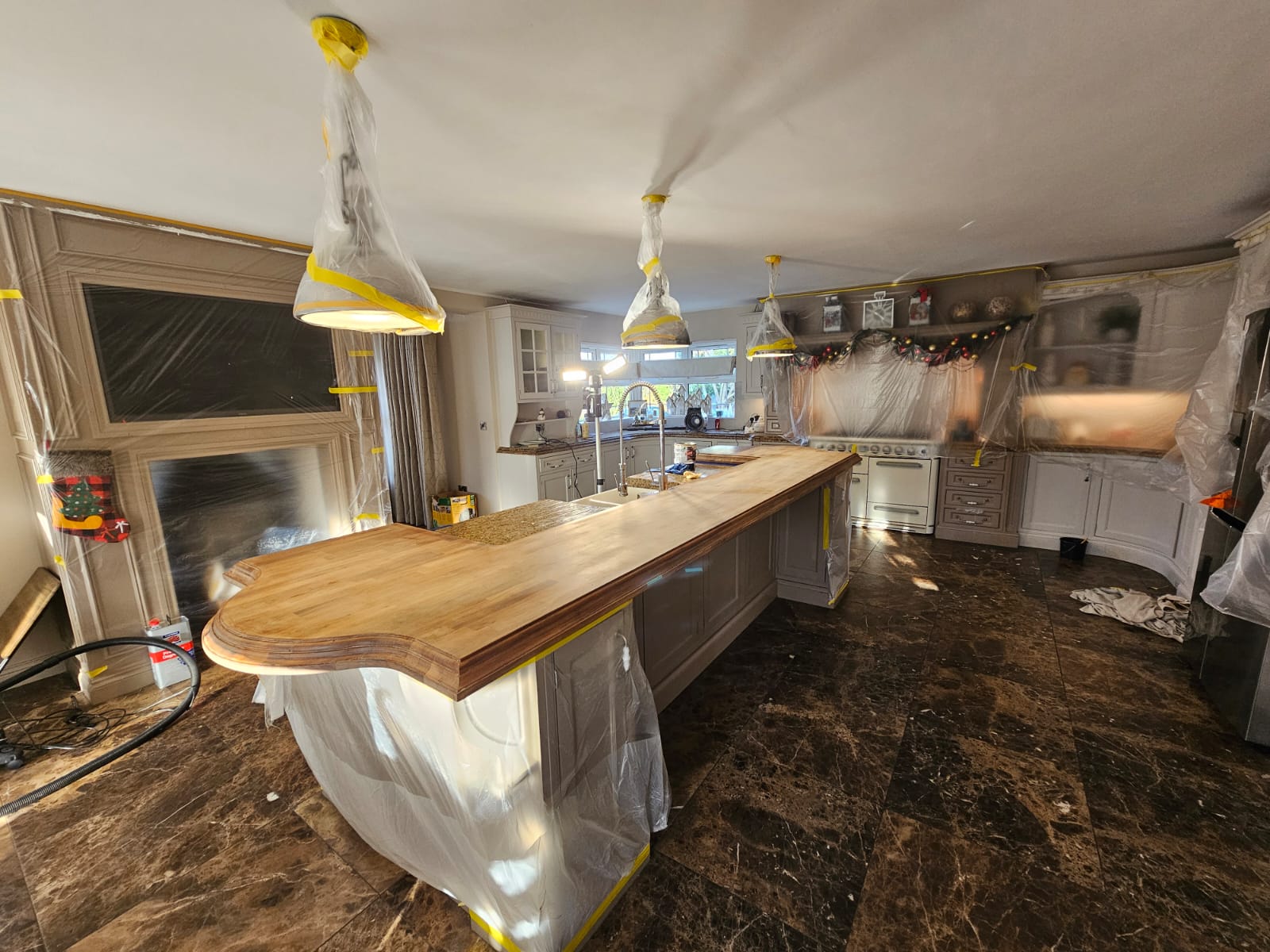
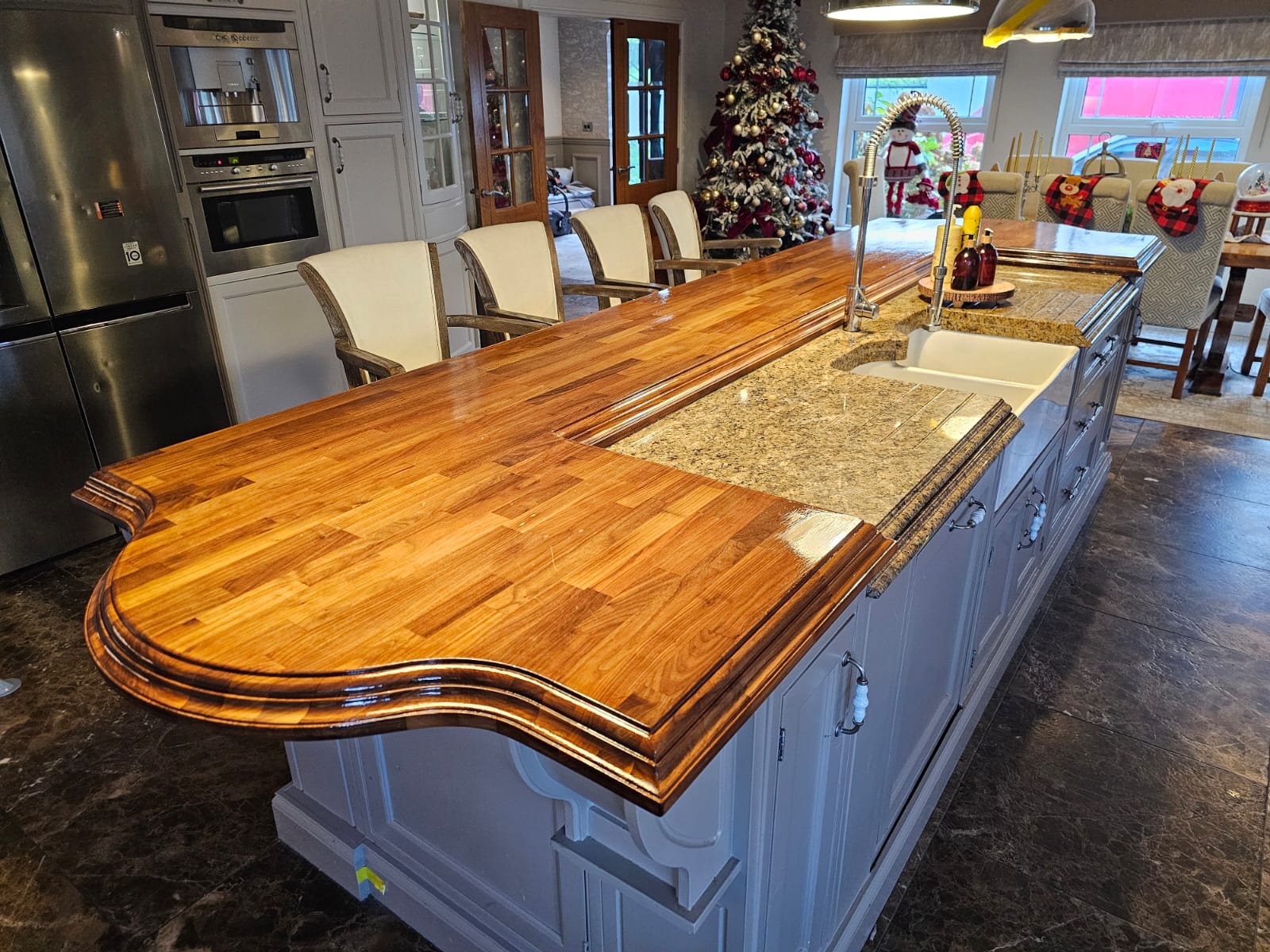
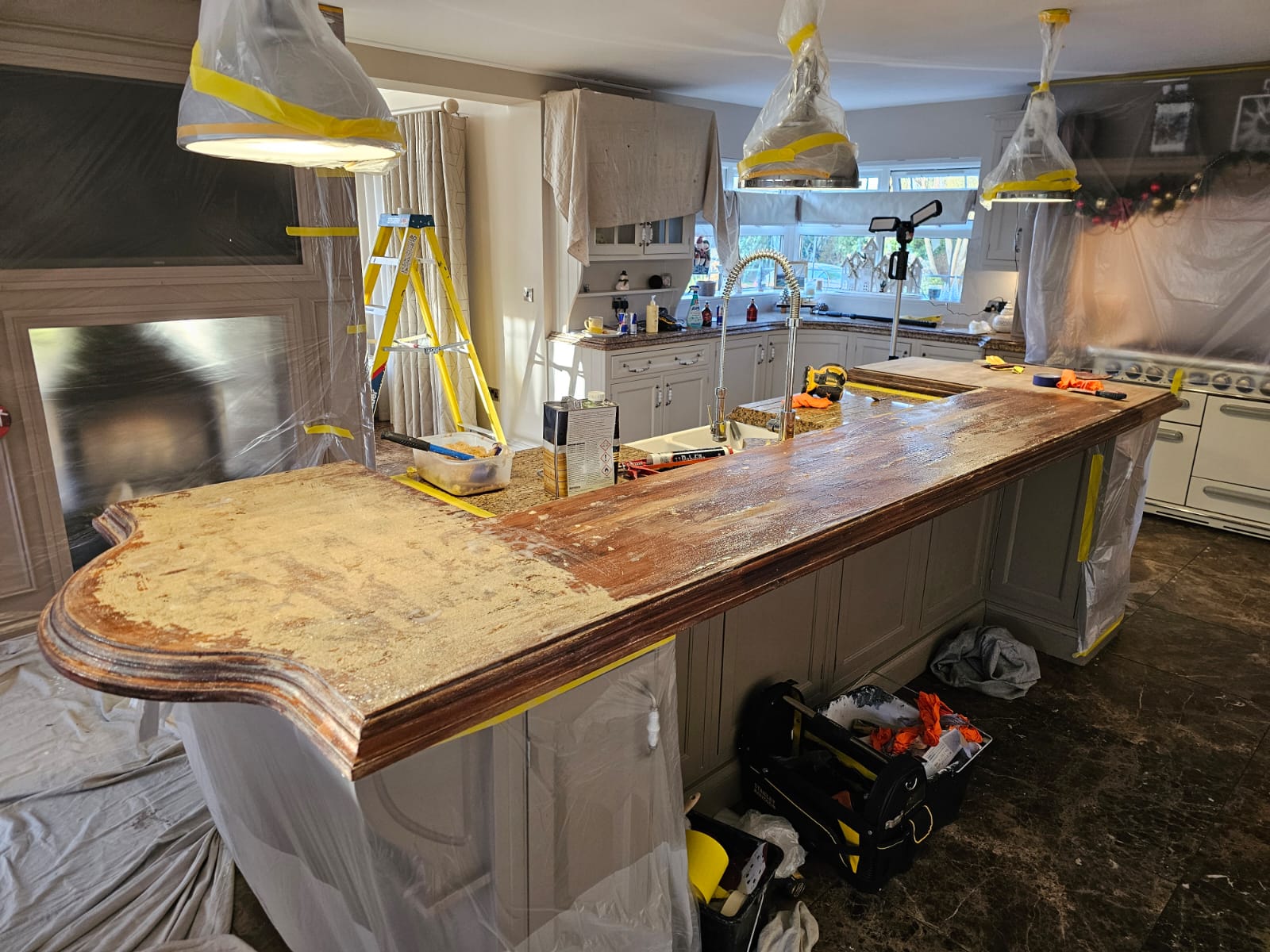
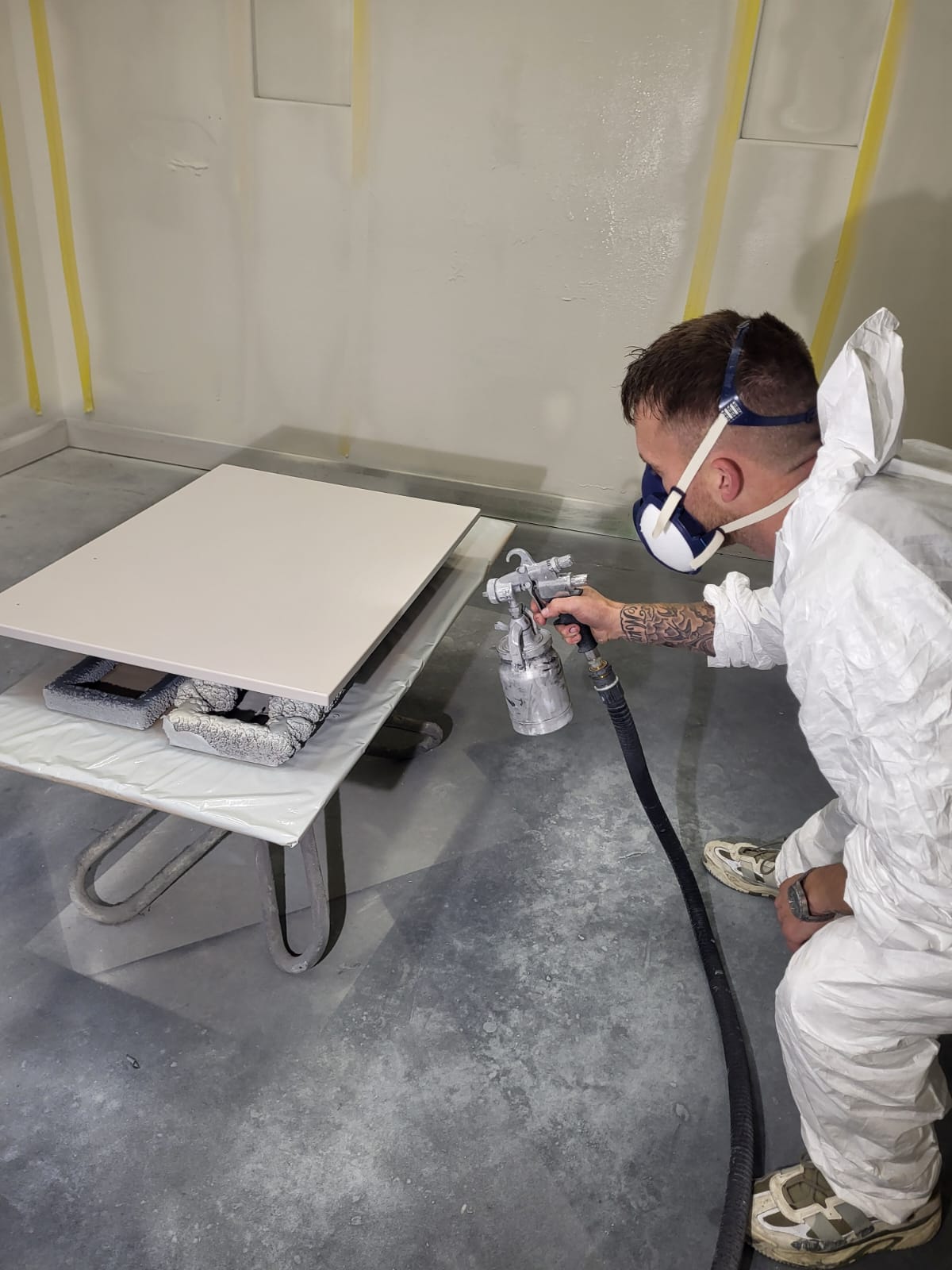
Real jobs from our own County Down work, not stock photography.
Where to Go Next
If you are pricing a whole property refresh rather than just the kitchen, these are the services people usually pair it with.
Questions we get asked
Kitchen Respraying Questions
What areas do you cover for kitchen respraying?
We work out of Downpatrick and cover County Down along with Belfast, Lisburn and Newry. Because doors are sprayed on site behind containment rather than taken away, travel time matters less than access and parking, so ask even if you are toward the edge of that area.
How do I get a price for my kitchen?
Send a few photographs on WhatsApp showing a full run of units, a close up of a door edge and the area above the hob. That is usually enough for a guide figure. Anything we are going to commit to in writing gets a survey first, because the door construction is what sets the price.
Are you insured and is the work guaranteed?
Yes. Shore Spray Painting Co Down is fully insured and we provide a workmanship guarantee on the finish. We only use coatings we have already put through our own kitchens and jobs, rather than whatever is cheapest that week.
How much mess does spraying make in the house?
Less than people expect. The kitchen is sheeted and masked, and we run containment so overspray does not travel down the hall. The dustiest part is keying, which we do with extraction. You keep use of the rest of the house throughout.
When can we actually use the kitchen again?
You can use the worktops and appliances the same evening in most cases. The doors are the part that needs patience. They are handled carefully once rehung and reach full hardness over the following fortnight, so treat them gently for that period.
Can you respray vinyl wrapped doors?
Often yes, but not always. Where the wrap is intact and well bonded it can be keyed and coated. Where it has already started peeling at a corner or above the oven, painting over it only hides the problem for a few months. Those doors need stripping back or replacing, and we will tell you which at the survey.
Will the colour match a RAL or British Standard reference?
Yes. We mix to RAL, British Standard and NCS references. If you are matching an existing element such as a range cooker or a splashback, bring us the sample rather than the name, because two manufacturers can use the same colour name for different shades.
Is respraying really cheaper than new doors?
For a standard kitchen it is substantially cheaper, and the saving grows with the size of the kitchen because you are not paying for new carcasses, new hinges or a fitting day. Where it stops making sense is when the carcasses themselves are failing, and at that point new doors on old boxes is money wasted.
Can you spray the inside of the cupboards too?
We can, and for a light colour going over a dark one it is worth doing, because the inside edge of a door shows every time it opens. It adds preparation time since shelves and fittings have to come out, so it is priced separately rather than assumed.
What happens if a door gets chipped later?
Keep a note of the colour reference and the sheen from your job sheet. A chip on a sprayed door touches in far more easily than a chip on a factory finished one, and we can come back and blend a single door rather than redoing the run.
Do you spray bedroom and bathroom furniture as well?
Yes, and it is the cheapest time to do it. The masking, extraction and containment are already set up for the kitchen, so adding a set of fitted wardrobe doors or a vanity unit costs a fraction of what it would as a separate visit.
Request a Free Estimate
Tell us the rough number of doors and drawer fronts, the colour you have in mind and where you are in County Down. We will come back with a written price.
Get a Price for Your Kitchen
Send us photographs of your doors and the area above the hob, and we will tell you honestly whether respraying is the right call for your kitchen. No pressure and no obligation.