
Walls, ceilings, woodwork, render, cladding, fascias and garden joinery
House Painting Inside and Out Across County Down
Most people ring us about one job and end up buying two. The inside of a house is a dust and access problem. The outside is a moisture and movement problem, judged four winters later rather than on the day the van leaves. We price and plan the two halves separately.
Deciding what you are buying
Two Halves of a House, Two Different Trades
Indoors and outdoors share a van and very little else. Work inside is measured on cut lines, on how few rooms were out of action, and on whether anything got dusty that should not have. Work outside is measured after four winters. That single difference decides the coating, the preparation and the months of the year we will agree to begin.
It also decides who needs to be at home. Interior spraying wants a room emptied, or the contents sheeted and screened off at the doorway, and it wants a decision from you about which rooms come out of use in which order. Exterior work wants a tap, a route right around the building and somewhere flat to stand a platform. A lot of our clients put the outside into a week they are away and keep the inside for a week they are not.
We work from the Killough Road in Downpatrick and cover County Down along with Belfast, Lisburn and Newry. If your house sits out toward the Lecale coast at Ardglass or Killough, or looks across the Strangford shore, the exterior half of your quote will not read the same as an inland one. Salt holds moisture against a wall long after the rain has stopped, and an elevation facing open water takes driven wet that a sheltered town street never sees.
Outside the House
- Render, roughcast and painted masonry, including full colour changes and patch stabilising where a previous coating has let go
- Cladding boards and timber panels, front and gable elevations, back to sound timber where a board has gone soft
- Fascias, soffits and bargeboards in timber, which are the first thing to fail and the last thing anyone thinks to price
- Garage doors, railings and metalwork, prepared for the metal rather than treated as another wall
- Fences, gates, sheds and garden joinery, sprayed rather than brushed so the whole run finishes in a day
Inside the House
- Walls and ceilings room by room, or the whole house in one hit if it is empty between owners
- Skirtings, architraves, doors and door linings, sprayed to a flat film with no brush texture along the length
- Stairwells and double height hallways, which are an access job as much as a painting one
- Built in wardrobes and fitted furniture, handled the same way we handle cabinet doors
- Garage and utility interiors, usually the cheapest square metre in the house to bring back
A Wall That Cannot Dry Out Pushes the Paint Off
The most expensive exterior failure we get called to is rarely bad workmanship on the last coat. It is a solid walled property that somebody sealed with a plastic film. Walls built without a cavity handle water by taking it in and giving it back through the face. Close the face and the water stops behind the film, freezes, and takes the coating off in plates with a skin of render still attached.
- Older solid wall properties. With no cavity, the wall breathes or it fails. A microporous or mineral based system lets it. A general purpose masonry film does not, whatever the tin says about weatherproofing.
- Modern cavity walls and newer render. Far more forgiving, and a quality masonry coating is usually the sensible answer here. We will tell you when the argument for a breathable system is weak rather than sell you the dearer option.
- What is already on the wall. This changes the price more than the colour does. Stripping a failed film off a gable is most of the labour, and we would rather find that at the survey than halfway through the week.
- Cracks get repaired, not painted over. A hairline in render is a route for water, and it telegraphs back through any coating inside a season. Repairs go in first and are allowed to dry properly.
- Damp is not a decorating problem. If a wall is wet from something other than the weather, coating it hides the symptom for a summer. We will say what we think is going on and leave the paint until it is sorted.
Living in it while we work
Dust, Screens and an Occupied House
Spraying an empty house and spraying one with a family, a dog and a home office in it are different pieces of work with different prices. Neither is worse. They just need to be planned honestly, and the honest version is the one where you know on Monday which rooms you lose and when you get them back.
An Empty Property
Between tenants, before you move in, or during a renovation, the whole house can be sprayed in a fraction of the time. Nothing needs sheeting individually, the machine moves from room to room, and woodwork goes off with the walls instead of being cut in around them. If your dates are flexible, this is where the real saving sits.
A House You Are Living In
We work in zones. A screen goes across the doorway of the room in use, floors are covered right through the route we walk, and furniture is either moved out or wrapped rather than pushed to the middle and hoped for. Sanding is done with extraction on the tool. You keep the kitchen and a bathroom throughout, and we agree the running order before anything is opened.
Where a Brush Still Wins
Spraying is not always the right call indoors. One bedroom, kept in use, with a fitted carpet and a full wardrobe, is often quicker and tidier to roll and cut. We will tell you when that is the case. Turning up with a machine for a job a brush does better is not a service, it is a habit.
Ceilings and Stairwells
A big ceiling and a two storey stairwell are where a sprayed finish clearly beats a rolled one, because there is no lap mark and no roller stipple picking up the light. They are also the two places where access has to be set up properly rather than balanced. That is time in the quote, and it is why a stairwell costs more than its square metres suggest.
How the outside runs
The Order an Exterior Repaint Has to Follow
Northern Ireland does not give you a long season for this. Coatings want a surface above a minimum temperature, below a maximum moisture content, and a stretch of hours afterwards without rain landing on them. We would rather move a start date than put a coat on a damp wall and hand you a problem for next spring.
- Step 1
Survey and moisture check
We look at what is already on the wall, whether it is bonded, and how wet the substrate is. Wall construction and existing coating decide the system, so this is the visit that sets the price.
- Step 2
Wash down and treat growth
Algae, lichen and the green film on a north facing gable are killed off and washed back, not painted over. Anything living under a coating keeps growing and lifts it from underneath.
- Step 3
Repair and stabilise
Cracks are cut out and filled, hollow render is dealt with, soft timber is cut back to sound wood, and any chalky or powdery surface is bound with a stabilising primer before colour goes near it.
- Step 4
Sheet, mask and protect
Windows, doors, paving, planting, cars and boundaries are covered. On a terrace or a tight driveway this is the stage that decides whether your neighbours enjoy the week or not.
- Step 5
Coat to suit the wall
The system is applied in the number of coats it needs rather than the number that fits the day. Elevations are finished one at a time so there is no join drying at a different rate across a corner.
- Step 6
Demask and walk the elevations
Masking comes off cleanly, edges are cut in, and we walk every side of the house with you before the platform leaves the ground. Snags get fixed while the kit is still there.
Timber, cladding and the bits at roof level
Anything Made of Wood Is Moving All Year
Masonry sits still. Timber does not. It swells in a wet October and shrinks again in a dry June, and every coating on it has to cope with that or split. This is why a rigid, hard wearing exterior paint that performs beautifully on render can fail on a cladding board within two seasons. The film has to move with the wood.
It also changes how joints are treated. A hard filler in a moving joint cracks, then holds water in the crack, which is worse than leaving it alone. Flexible sealant goes where there is movement and rigid filler only goes where there is none.
Cladding and Timber Panels
- End grain is the weak point. The cut end of a board drinks water faster than the face, so ends and cut lines get sealed properly before the elevation is coated.
- Failed boards get replaced first. A soft board is not a painting job. We flag it, and you can have it changed before we start or accept that the coating there is cosmetic.
- Fixings and nail heads are treated so rust does not bleed a brown line down through a new light colour six months later.
- Fascias, soffits and bargeboards in timber are access work and are priced as access work. They sit above everything, so they are done before the walls under them.
- Gutters get checked while we are up there. One overflowing onto a freshly coated elevation makes short work of it, and it costs nothing to mention.
Fences, Gates and Garden Joinery
A long boundary fence is the clearest case for spraying anywhere on a property. Brushing a hundred metres of feather edge takes days and never reaches between the boards. Sprayed, the coating gets behind the overlap where rot starts. Planting on both sides is sheeted, and we ask you to warn the neighbour rather than surprising them.
Colour, Covenants and Consent
Changing an exterior colour alters the street as well as the house. If your property is listed, or sits inside a conservation area, an external colour change can fall within the consent regime even when the work is only decorative. Check with your district council, or with the Historic Environment Division for a listed building, before you commit. In a managed development, read the covenant first.
Houses We Have Painted in County Down
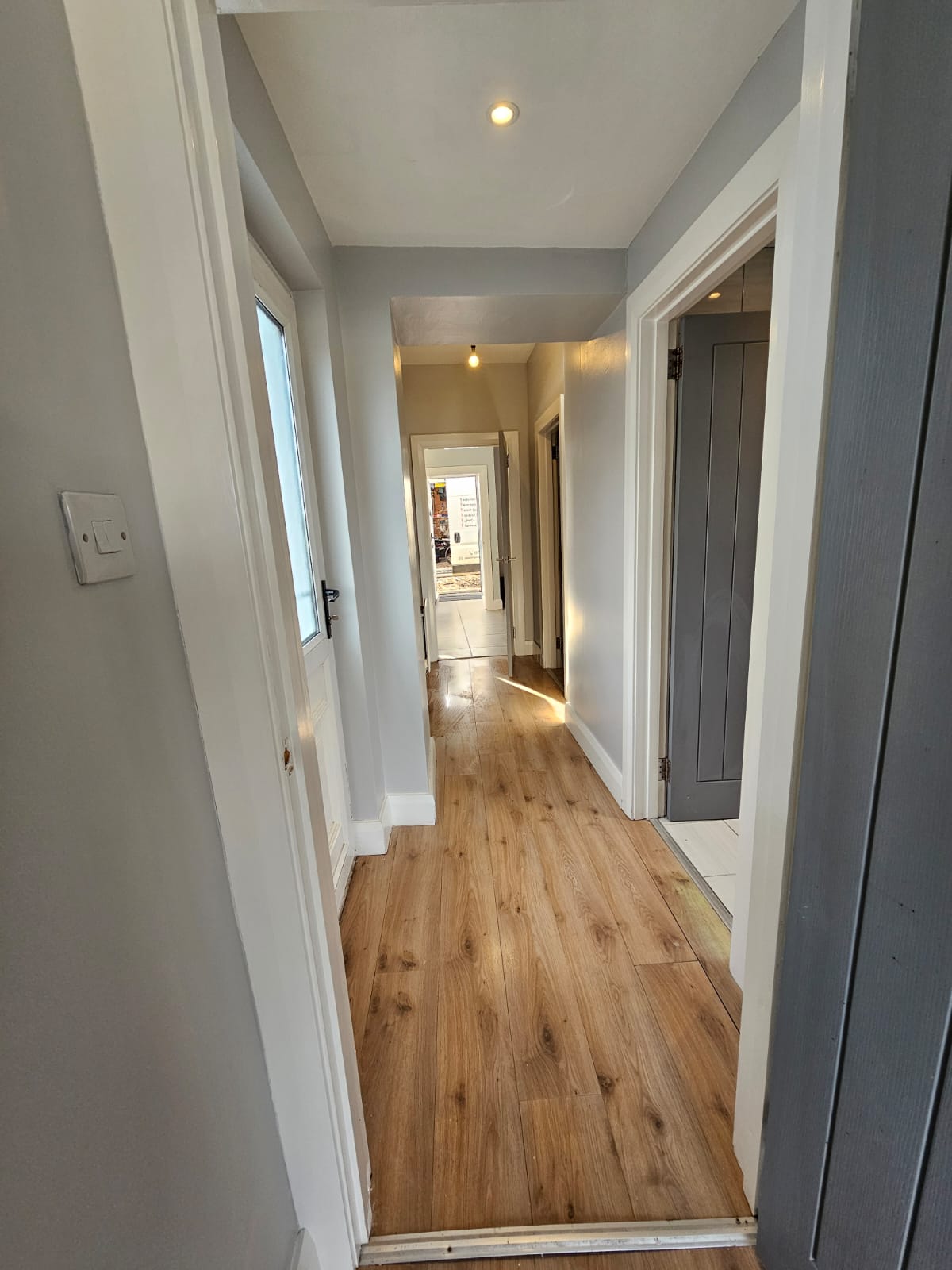
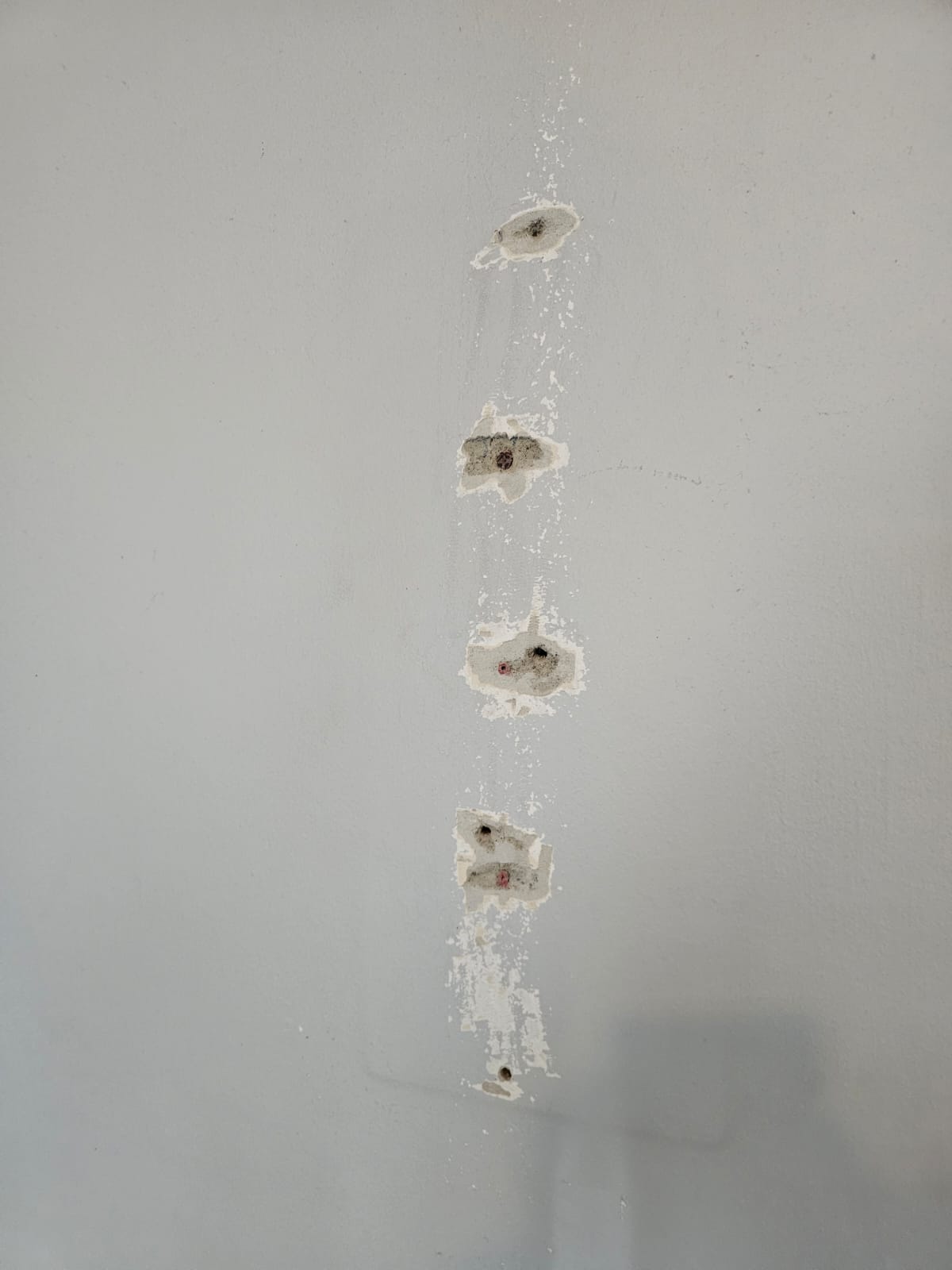
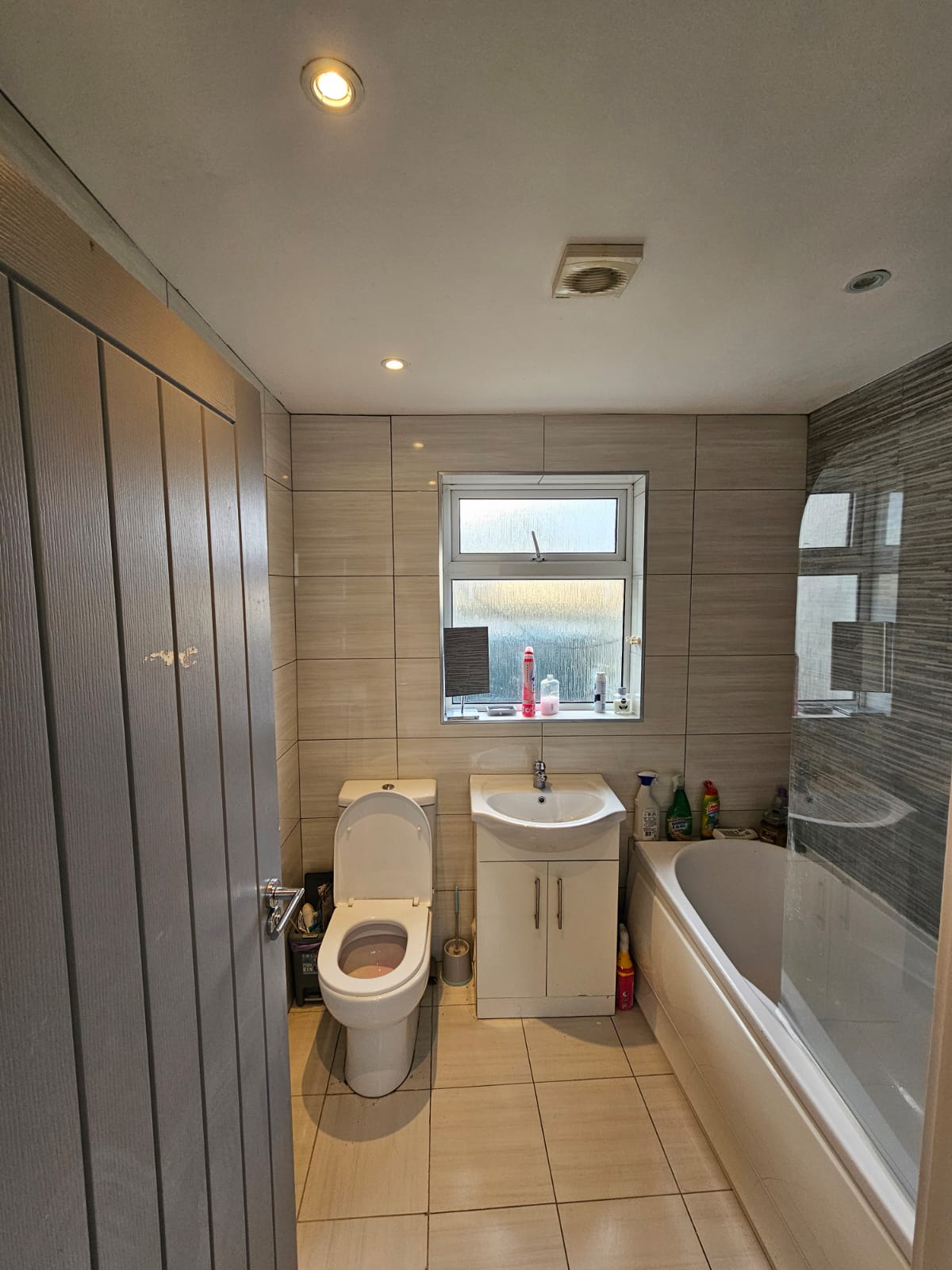
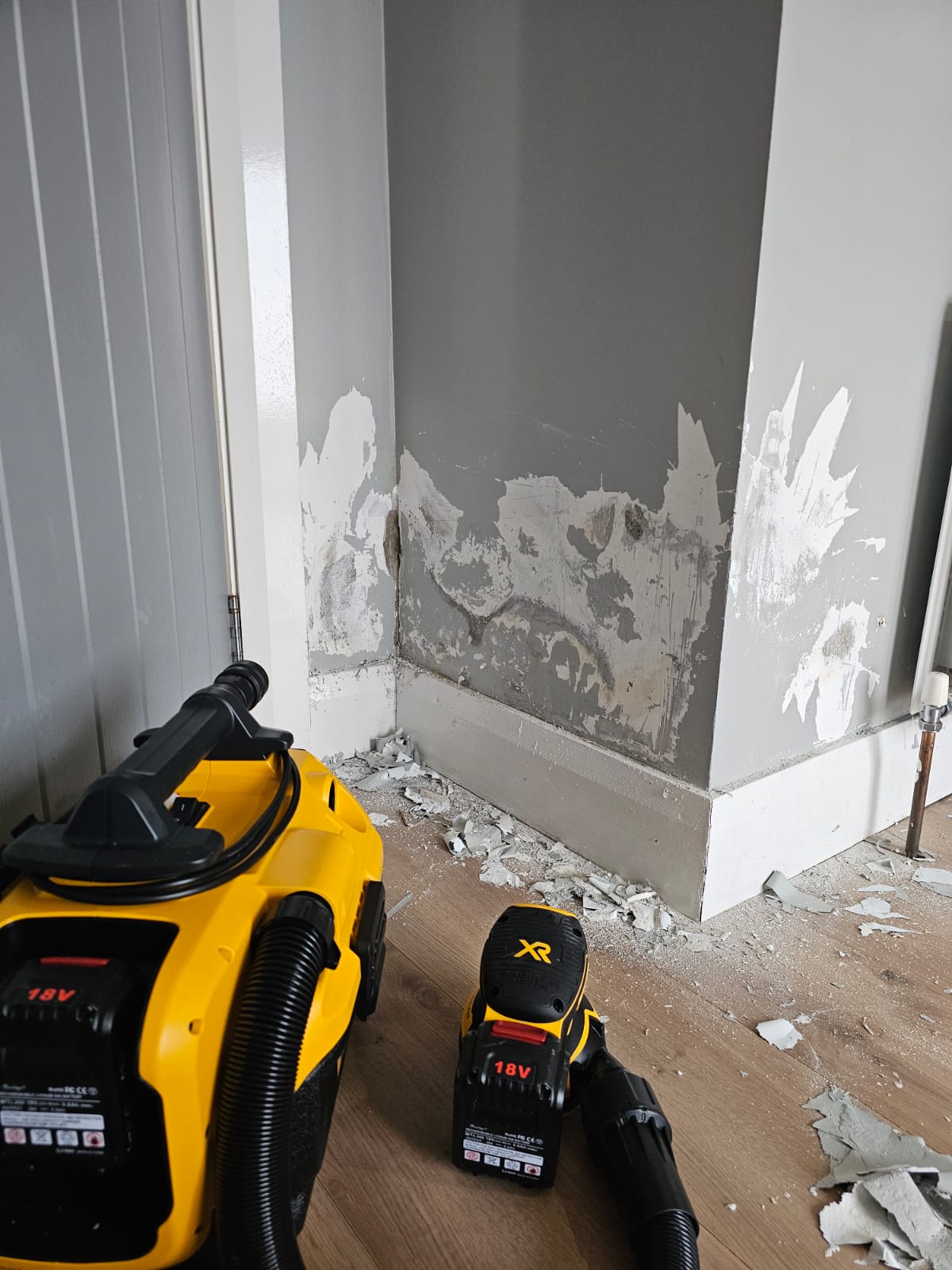
Interior and exterior work from our own jobs, photographed on site.
Other Work on the Same Property
House painting is usually booked alongside one or two of these, and doing them in the same visit saves you a second set up.
Questions we get asked
House Painting Questions
Which parts of County Down do you take houses on in?
All of it, from a base on the Killough Road in Downpatrick, plus Belfast, Lisburn and Newry. Interior work can be booked at any time of year. Exterior work in the outer parts of our patch tends to get grouped into the same settled spell, so tell us your rough timescale and we will be straight about when we can realistically start.
How do you put a price on a whole house?
Inside is measured room by room and depends on whether the property is empty or lived in. Outside is measured by elevation and depends far more on what is already on the wall than on how big the wall is. You get the two figures separately so you can do one now and one later if you want to.
Are you insured to work on my home and is the finish guaranteed?
Yes to both. Shore Spray Painting Co Down is fully insured and gives a workmanship guarantee. On domestic work that cover matters most around access equipment and around overspray, which is why sheeting and protection are set up before anything is switched on rather than after.
How much dust and mess does this actually make indoors?
Sanding makes dust and everything else does not, so we run extraction on the tool and screen the room being worked in. Floors are covered along the whole route from the front door. The rooms you are not losing that day stay usable, and we clean up at the end of each day rather than at the end of the week.
How soon can we use the rooms again, and how soon can it rain?
Indoors, a room is usually back in use the same evening, with furniture kept off freshly coated skirtings for a couple of days. Outdoors, the answer is in the forecast rather than the tin. We plan each coat so it has hours of dry weather behind it, which is exactly why we will move a start date rather than gamble one.
Our house is old and has solid walls. Does that change the paint?
It changes it completely. A wall with no cavity gets rid of moisture through its own face, so it needs a system that lets water vapour out. Sealing that face with a standard film traps water behind it, and the coating comes away in plates the first hard frost. We check the wall build before we specify anything.
Do we need to move out while the work is done?
Almost never for a normal repaint. We work in zones so you keep a kitchen and a bathroom and a bedroom throughout. If the whole house is being sprayed at once, which is far quicker and cheaper, then being out for a few days makes sense, and that is usually a job people book between moves.
What is the best time of year for exterior painting here?
Late spring through early autumn gives the most usable days, but the calendar matters less than the conditions on the day. What we need is a surface that is warm enough and dry enough with dry hours after it. A settled week in April can be better than a wet one in July.
How often should the outside of a house be repainted?
It depends far more on exposure than on age. A sheltered rear elevation can go a long time. A south west facing gable near the coast takes ultraviolet and driven salt rain and works much harder. Rinsing render with clean water once or twice a year removes salt and buys you real time.
Can you change the colour of roughcast or existing render?
Yes, and a colour change is one of the biggest visual differences you can make to a property for the money. The textured surface takes more material than a flat one, so it is priced on coverage rather than on area alone. We will also check that what is already on there is sound enough to take a new colour.
Will you do fences and garden joinery as a job on their own?
Yes. A long boundary fence, a set of gates or a garden room is a straightforward standalone visit, and spraying gets coating into the overlap between boards where brushing never reaches. It is also the cheapest thing on this page to add on while we are already at the property for something else.
Request a Free Estimate
Let us know the number of rooms, which elevations you want done, whether the property is occupied, and where you are in County Down.
Get a Price for Your House
Tell us whether you are thinking inside, outside or both, and roughly when. We will give you two honest figures and tell you which half is more urgent, even if that means telling you to wait until spring.